
Step Feeders
Custom Step Feeders Designed for Your Exact Application
When parts are too large, too delicate, or too complex for a traditional vibratory bowl feeder, a step feeder is often the ideal solution. Bellco’s custom step feeders use a series of precision-machined elevating plates to gently lift and orient parts — with virtually no part-on-part contact, minimal noise, and zero risk of surface damage. Every step feeder system we build starts with a detailed SolidWorks 3D model, engineered specifically for your part geometry and production requirements. Whether you’re feeding cosmetic components, medical devices, or heavy castings, Bellco delivers a step feeder system that integrates seamlessly into your automation line — at 20–40% less than competitors.
|
Choose a Step Feeder When… |
|
✓ Parts are large, heavy, or oddly shaped |
|
✓ Surface finish is critical (cosmetic, painted, plated) |
|
✓ Parts are long, over 7-8 inches |
|
✓ Low noise is required on the production floor |
|
✓ Gentle handling is needed (medical, electronics) |
|
✓ Compact footprint |
|
Choose a Bowl Feeder When… |
|
✓ Parts are small to medium and uniform |
|
✓ Minor part contact is acceptable |
|
✓ Very difficult orientation is required |
|
✓ Standard noise levels are acceptable |
|
✓ Higher feed rates are the priority |
|
✓ Space constraints are not a concern |
Not sure which feeder type is right for your application? Send us your part details and we’ll recommend the best solution — no obligation.
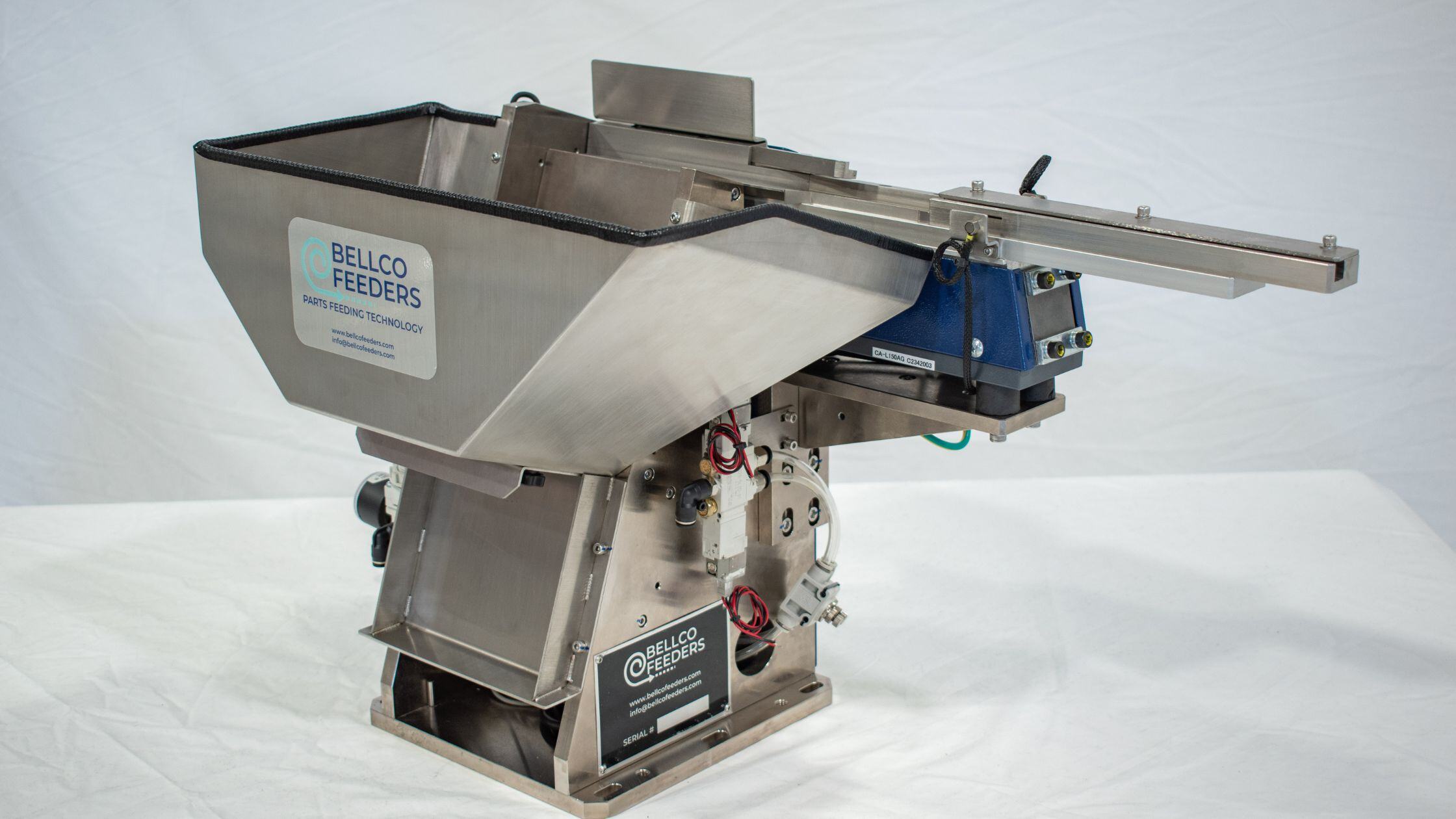
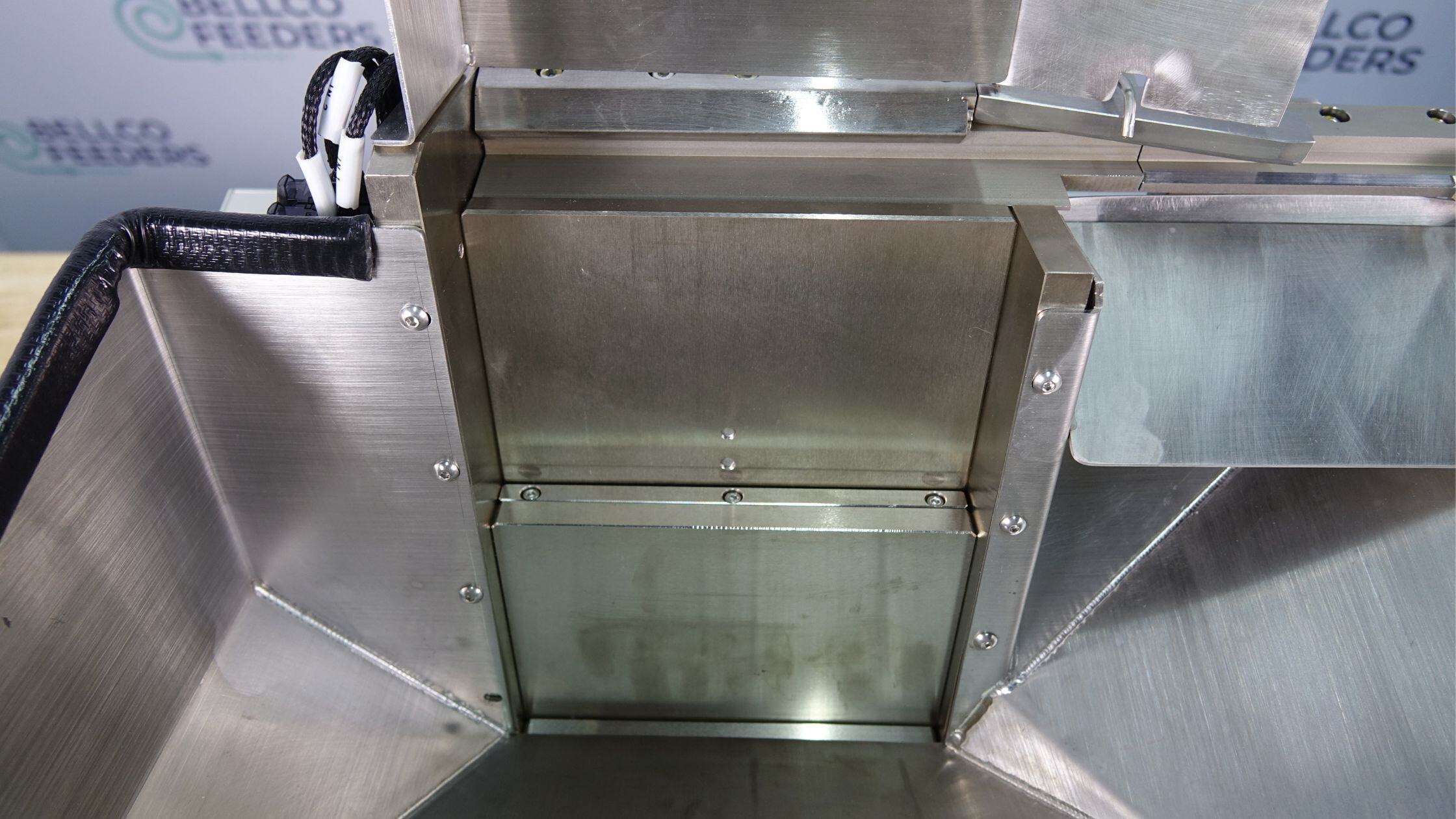
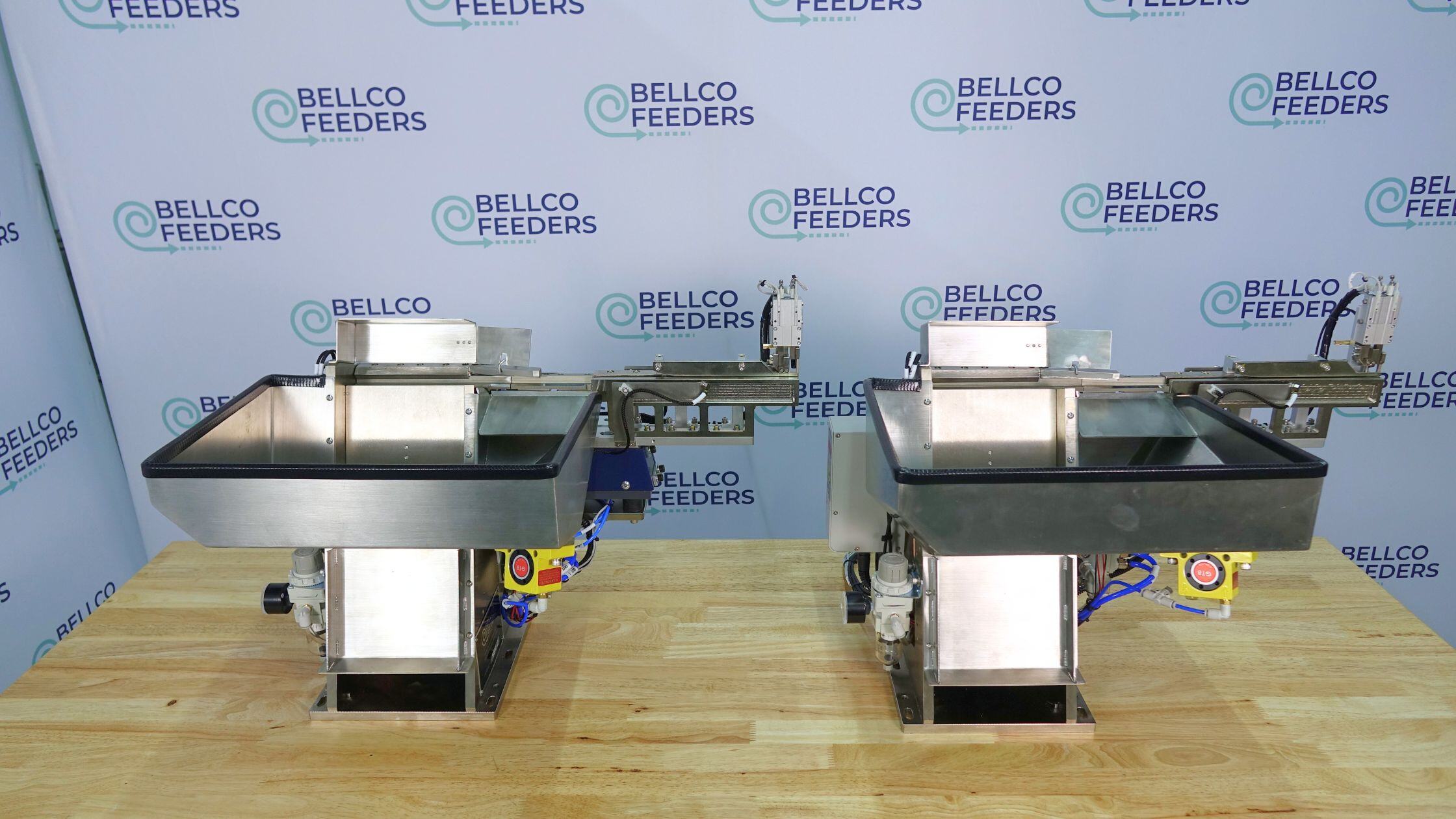
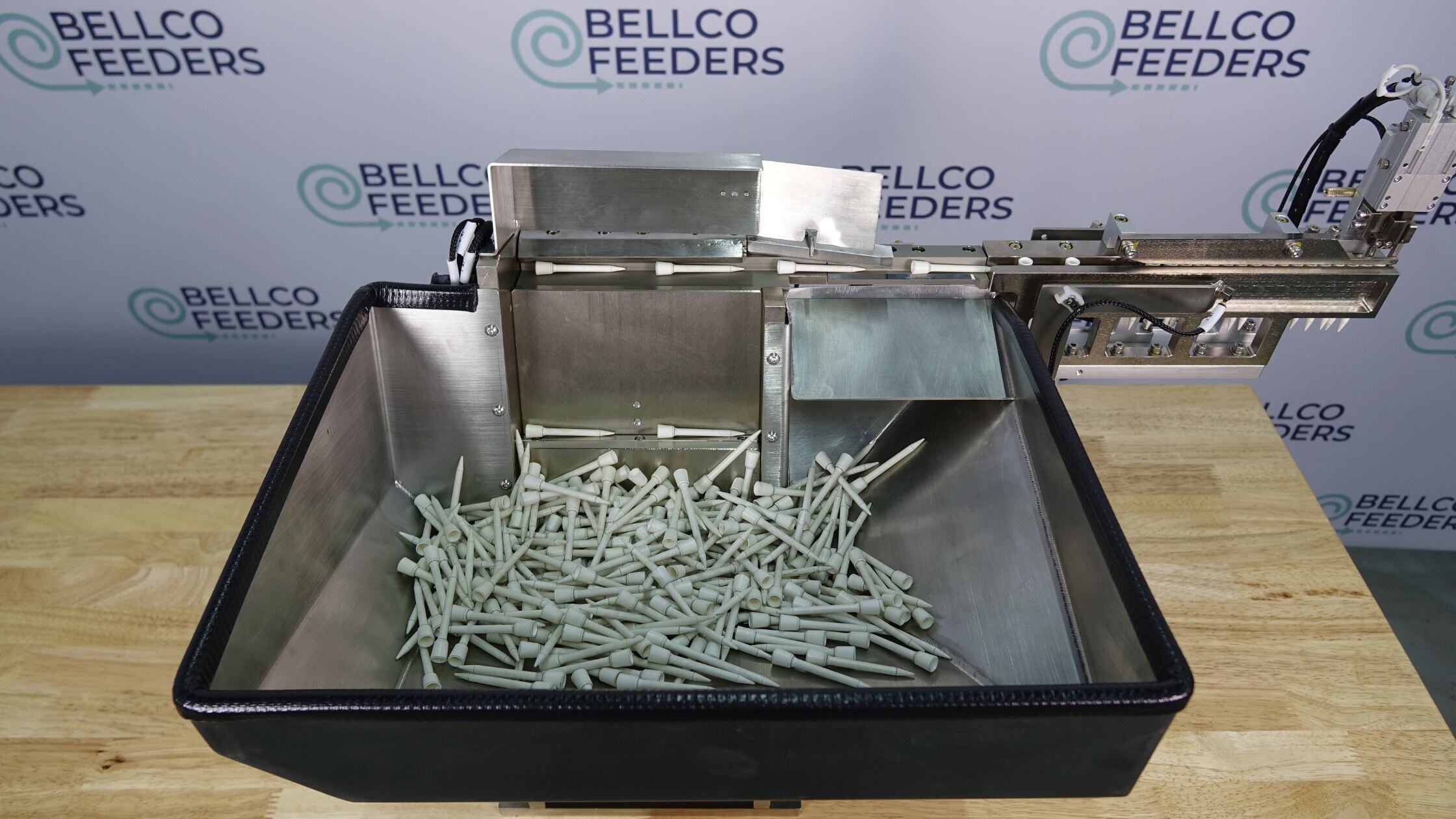
How Our Step Feeders Work
#faqs
Frequently Asked Questions
What’s the difference between a step feeder and a vibratory bowl feeder?
What’s the difference between a step feeder and a vibratory bowl feeder?
A vibratory bowl feeder uses vibration to move parts along a spiral track inside a bowl. A step feeder uses reciprocating plates to gently elevate parts from a hopper to an orienting rail. Step feeders are the better choice when parts are large, delicate, cosmetic, or prone to tangling. They’re also significantly quieter than bowl feeders.
What types of parts work best with a step feeder?
Step feeders excel with parts that are too large or heavy for a bowl, parts with cosmetic or painted finishes that can’t tolerate scratching, medical components requiring gentle handling, parts that tangle or nest together, and heavy castings or forgings. If you’re not sure, send us your part and we’ll tell you which feeder type is the best fit.
How much does a custom step feeder cost?
Every step feeder is custom-engineered, so pricing depends on your part, feed rate, and integration requirements. That said, Bellco systems are typically 20–40% more affordable than comparable quotes from larger feeder houses. Contact us with your part details for a fast, no-obligation quote.
What’s included with a Bellco step feeder?
Every system includes a full SolidWorks 3D model for your approval, precision-machined step plates and tooling, integrated hopper, linear track, escapement (if needed), Keyence sensors, SMC pneumatics, Hiwin linear guides, a 1-year warranty, and on-site installation support from our road technicians.
How long does it take to get a step feeder built?
Our standard lead time is 12–14 weeks from design approval to delivery. If your timeline is tighter, we offer an 8-week expedite option. We’ll keep you updated at every milestone along the way.
Do you offer on-site installation and support?
Absolutely. Bellco has 5 dedicated road technicians who handle installation, line integration, tuning, and troubleshooting on-site anywhere in the United States. We don’t just ship a feeder and walk away — we make sure it runs.
Feeder Accessories
Ready to Get Started on Your Step Feeder Project?
Send us your part details, drawings, or CAD files and we’ll put together a custom proposal with a SolidWorks 3D model — so you can see exactly what you’re getting before production starts. No obligation, no pressure, just a team that genuinely enjoys solving feeding challenges.