Components & Accessories
Pre-Feeders & Elevated Pre-Feeders
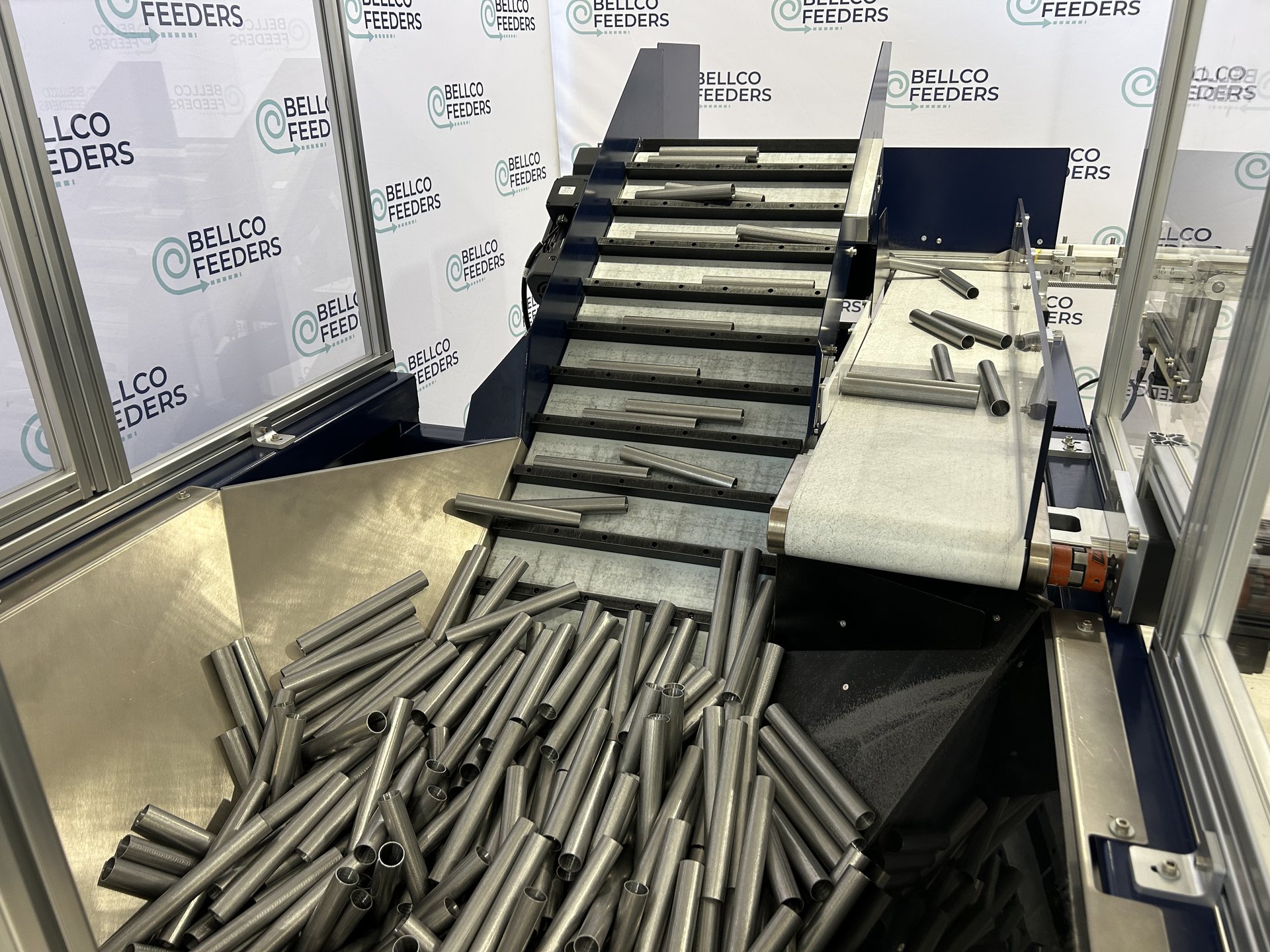
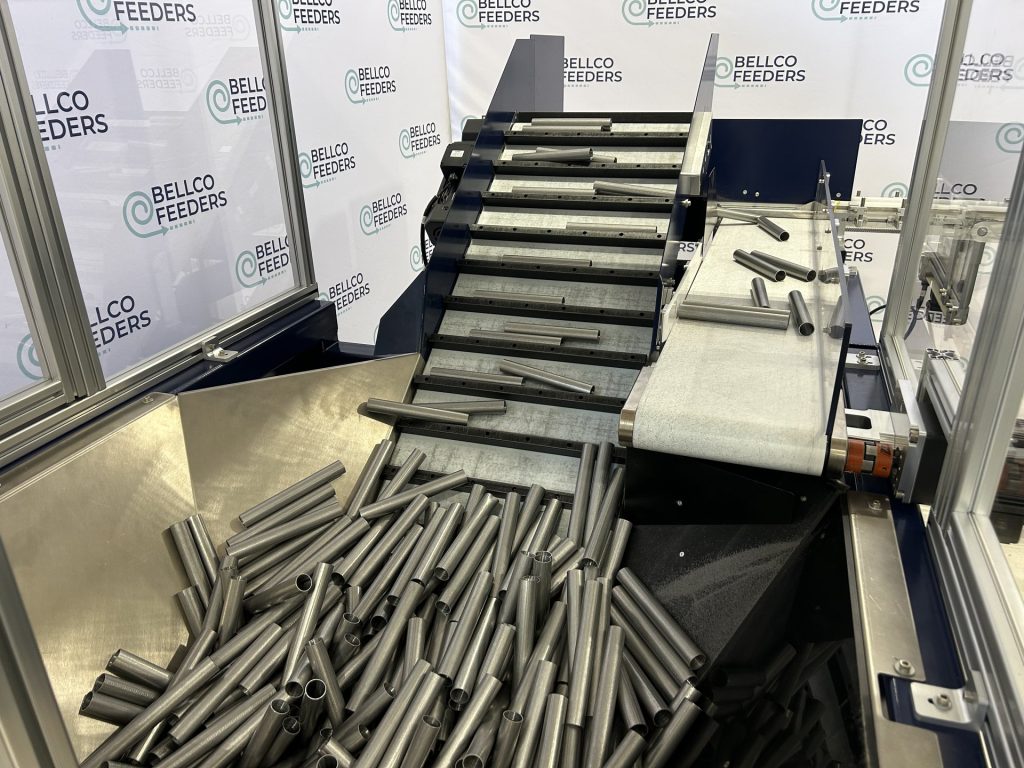
A bowl feeder runs best at a consistent fill level. A pre-feeder holds the bulk, meters parts in as the bowl draws down, and lets an operator load a full box at waist height instead of climbing to the bowl.
 01 / 05
What You Get
Bulk In At The Bottom, Parts Out At Height
Floor-Level Bulk Bin
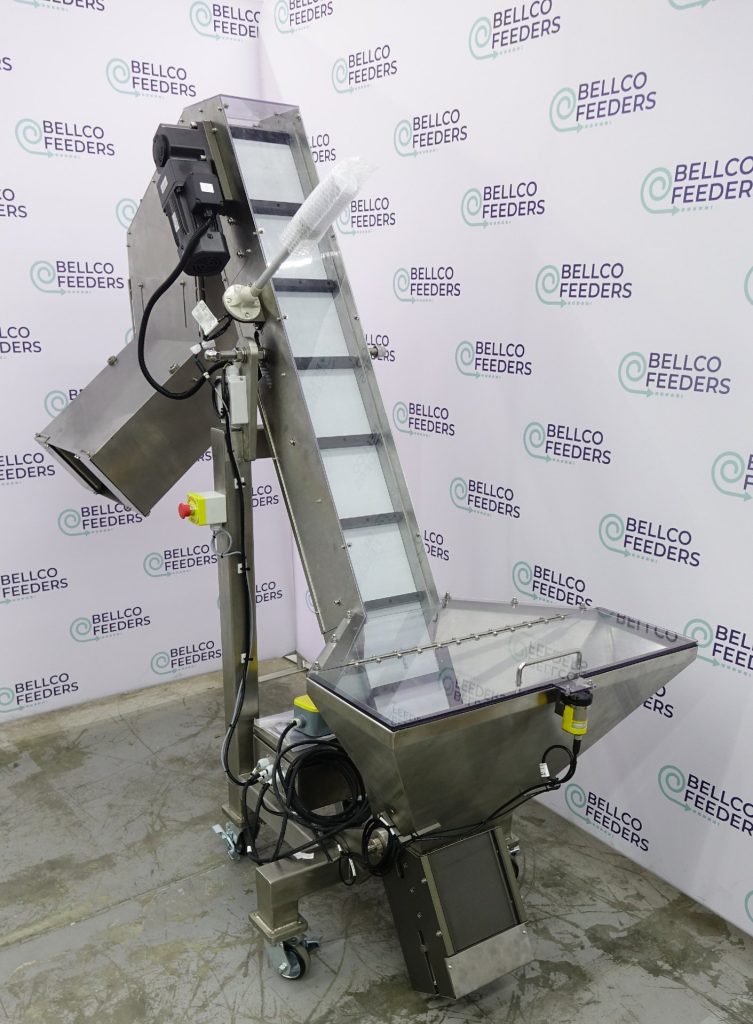
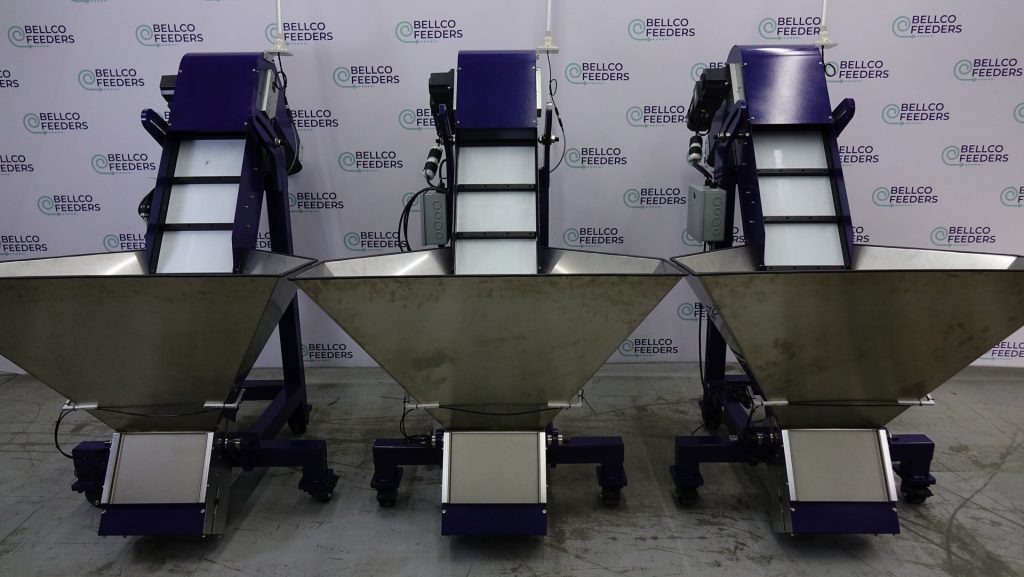
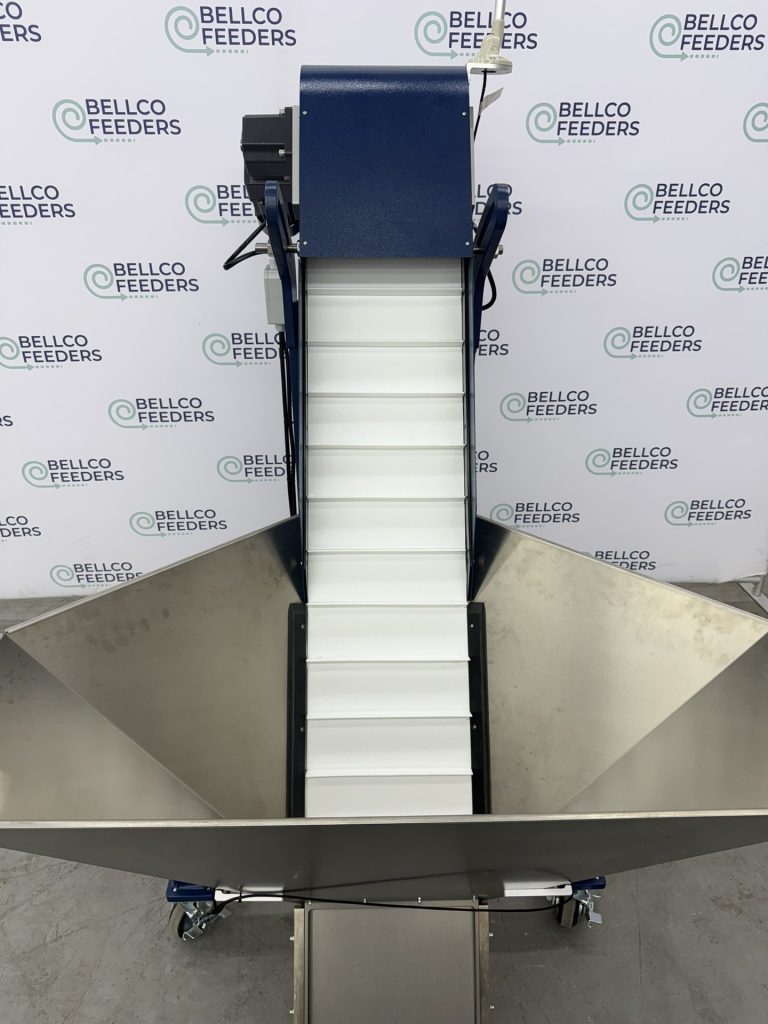
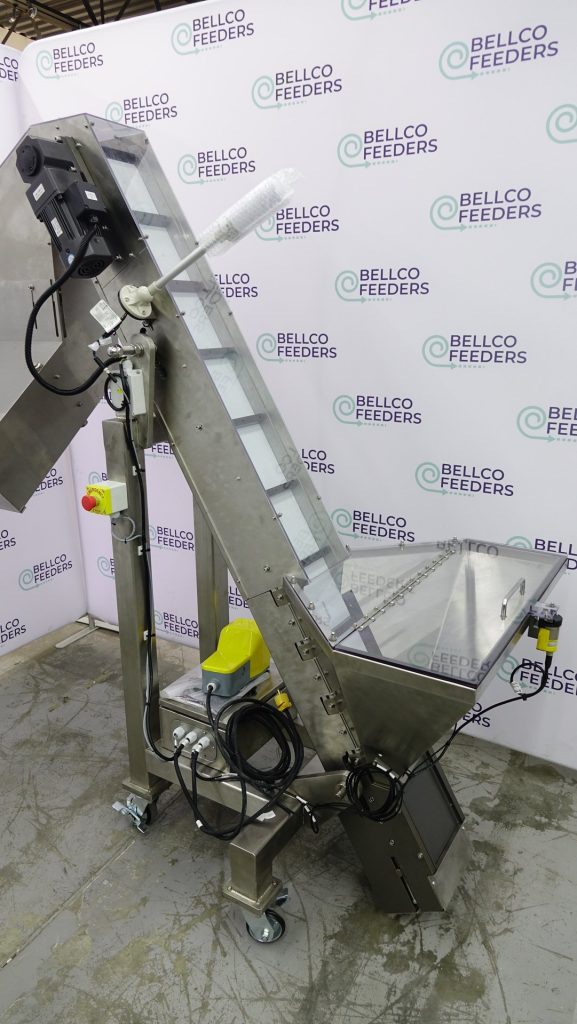
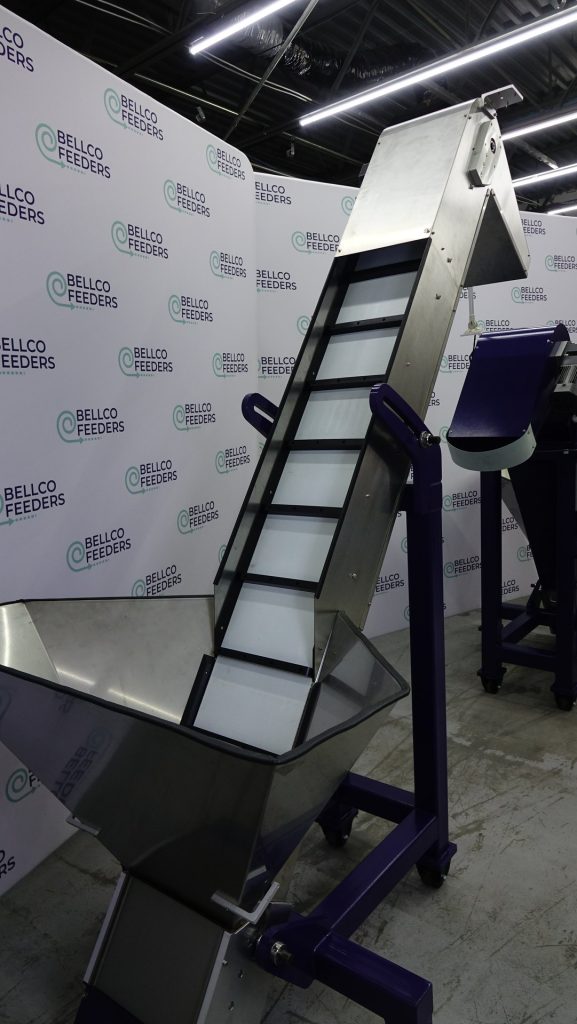
A stainless bin sized to your batch, low enough that an operator empties a box into it without lifting overhead. On casters with leveling feet, so it moves when the cell does.
Cleated Incline Belt
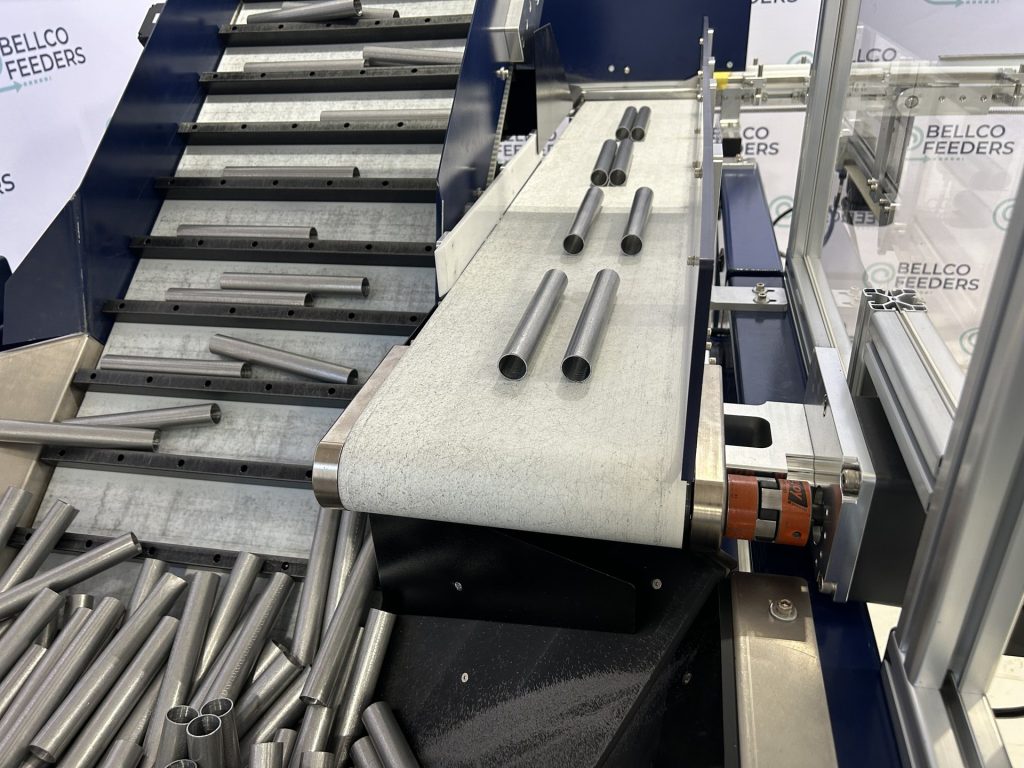
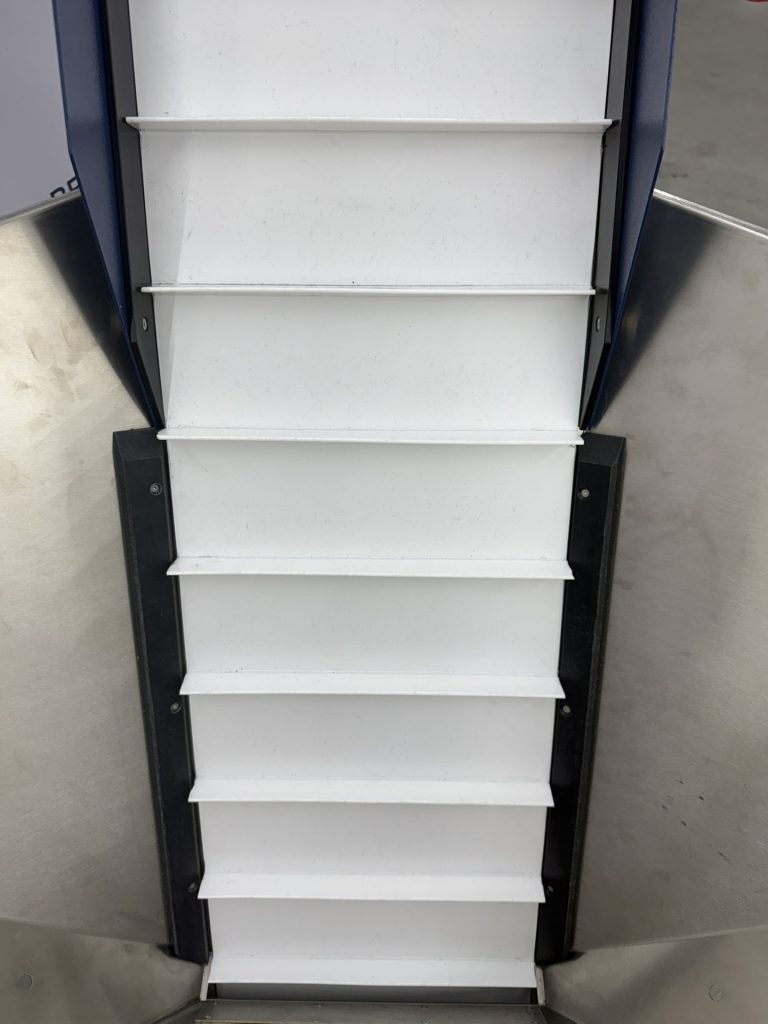
Parts ride up on a cleated belt rather than being tumbled up a spiral, which keeps machined finishes intact and handles part shapes a bowl would jam on.
Discharge Set To Your Bowl
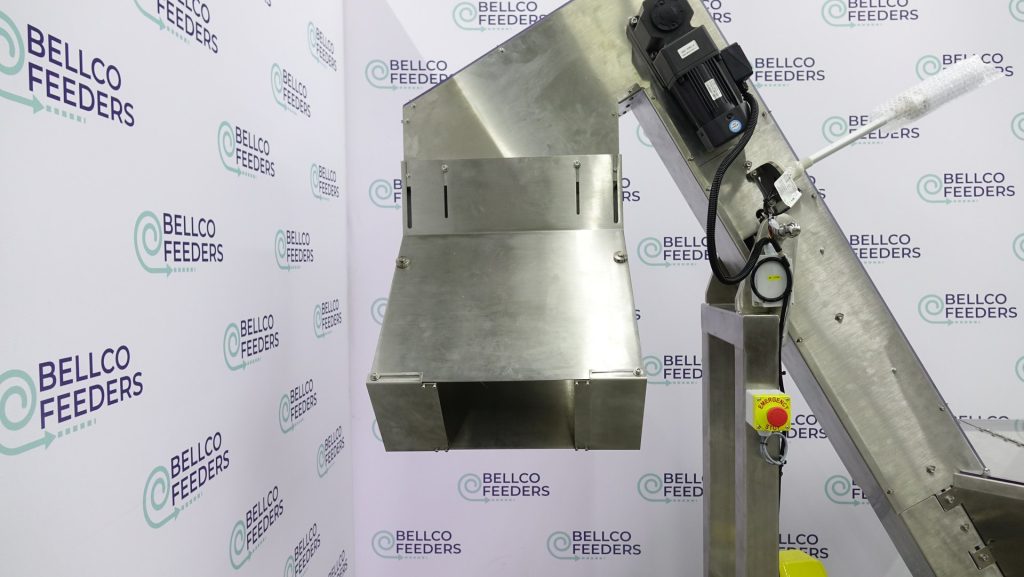
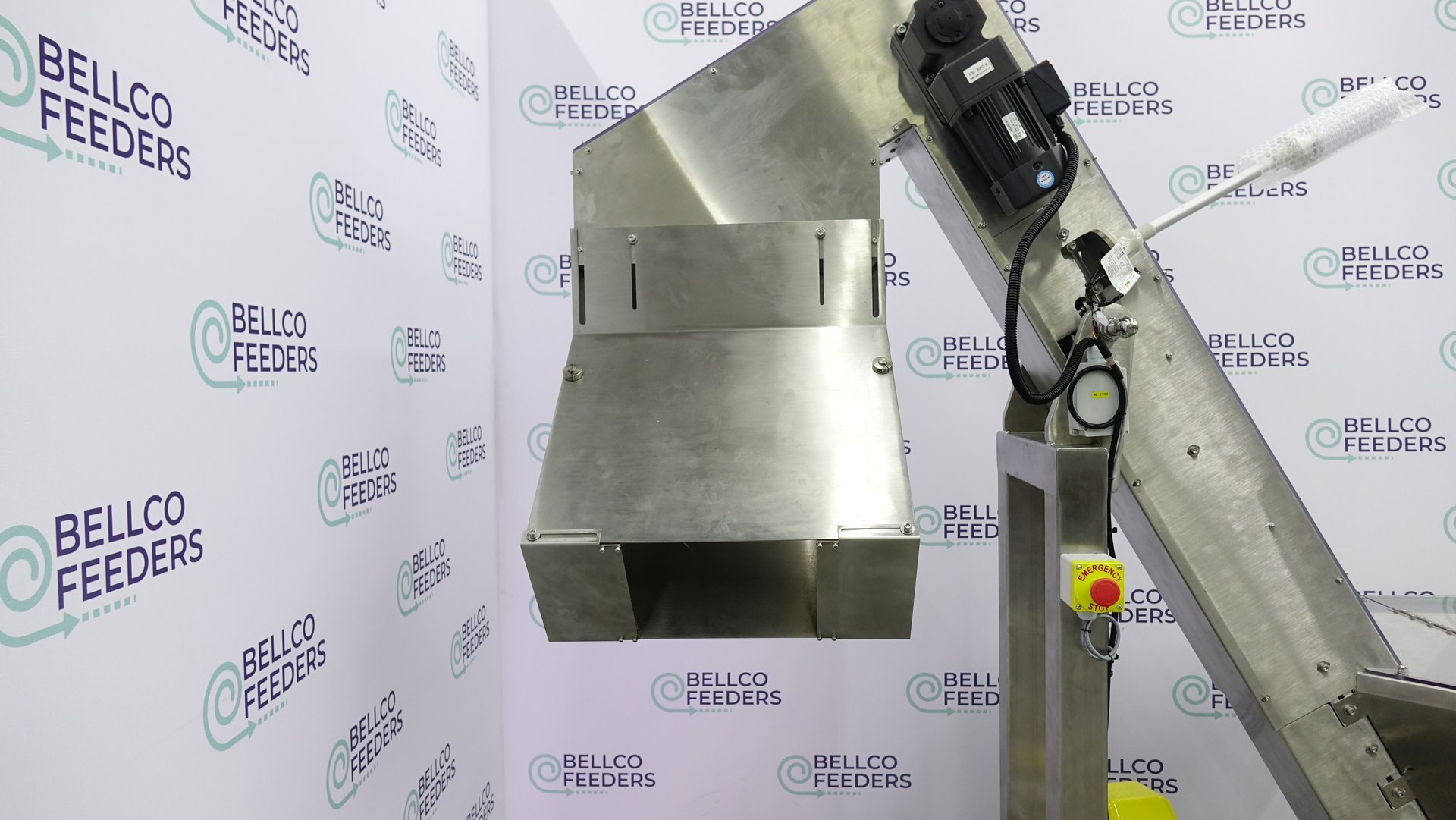
The chute geometry is engineered around your feeder — drop height, angle and offset — so parts land where the bowl wants them and not on the floor.
Level Sensing And Stop
A Keyence shortage sensor watches the level and stops the system on a low-part condition rather than running the bowl dry into your line.
The Bellco Difference
Why Bellco Pre-Feeders
Custom Engineered to Your Part
No templates. Every system is designed around your exact part geometry, feed rate, and integration requirements.
Designed in SolidWorks
You see and approve a full 3D model before we machine a single piece of tooling. No surprises on delivery.
Video Factory Acceptance Test
Every system runs a full FAT at our Ohio facility — video documented — so you know it works before it ships.
1-Year Warranty
Full parts and labor coverage backed by the Ohio team who built your system. Direct engineer access, no ticket queues.
20–40% Lower Cost
Direct manufacturing, no brokers, no markup. Premium quality at a price that consistently beats legacy suppliers.
Built in Concord Township
Pre-Feeders Up Close
 01 / 09
Common Questions
Pre-Feeder FAQs
What is the difference between a pre-feeder and a bulk part hopper?
A bulk hopper sits above the feeder and gravity-feeds it. An elevated pre-feeder sits on the floor and lifts parts up to the feeder on a belt. Choose the hopper when you have headroom and the parts fall well; choose the pre-feeder when you want floor-level loading, more volume, or gentler handling.
How long will it run without an operator?
That is a function of bin volume and your feed rate, so we size it to the interval you want. The systems we build are specified around a target — half an hour, an hour, a full shift — rather than a fixed capacity.
Will it damage machined or plated parts?
A cleated belt lifts parts rather than tumbling them, which is precisely why we specify one for finished components. If surface finish is critical, tell us at quote stage and we will scope the contact surfaces around it.
Can you retrofit one to a feeder we already own?
Usually yes. We need the bowl dimensions, the intended discharge point and the part. The engineering risk is all in the transfer geometry, and that is the part we model before anything is built.
How long does it take to get a quote?
Three business days is our average. Send us the part — or a drawing of it — along with your target feed rate and how the parts need to be presented downstream, and an engineer will come back to you with a scoped quote rather than a ballpark.
What support comes with the system?
Every system ships with a one-year warranty covering parts and labor, and you get direct access to the engineers who built it rather than a ticket queue. We provide remote diagnostics at no charge and can dispatch on-site support anywhere in North America.
Ready to Start?
Let's Size Your Pre-Feeder.
Tell us the part, the feed rate, and how long you want the cell to run between refills. We will size the bin and the belt around that, and show you the model before we build.
Talk to an Engineer
- Quote Turnaround
- 3 business days
- Design Review
- SolidWorks model before build
- FAT Video
- Included on every system
- Warranty
- 1 year, parts & labor
- Location
- Concord Township, Ohio