
Components & Accessories
Custom Linear Feeders
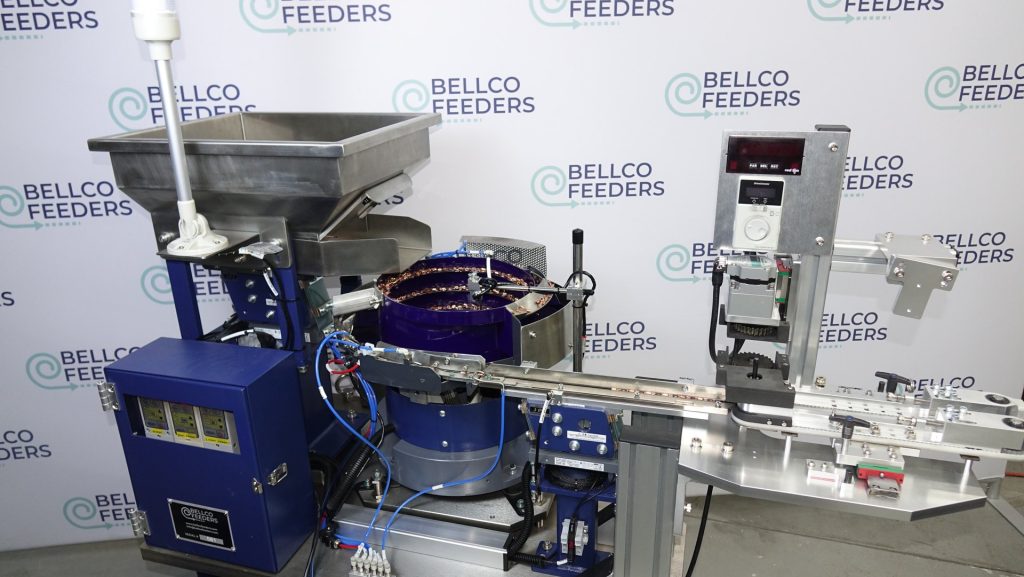
A linear feeder is what carries oriented parts from the bowl exit to the place they're actually needed — and builds the buffer that keeps a part ready every time your robot reaches for one. We build all three kinds, cut to your part rather than picked from a catalog.
 01 / 05
What We Build
Three Ways to Move a Part in a Line
Tell us the part, the rate, and what happens downstream, and we'll tell you which one your application actually needs — including when the answer is the cheapest of the three.
Vibratory Inline Track
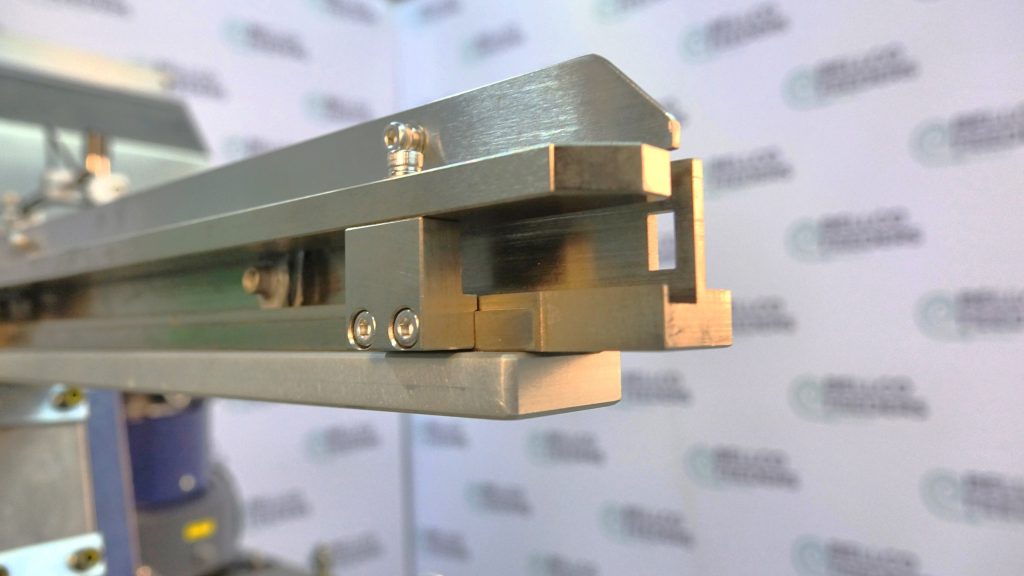
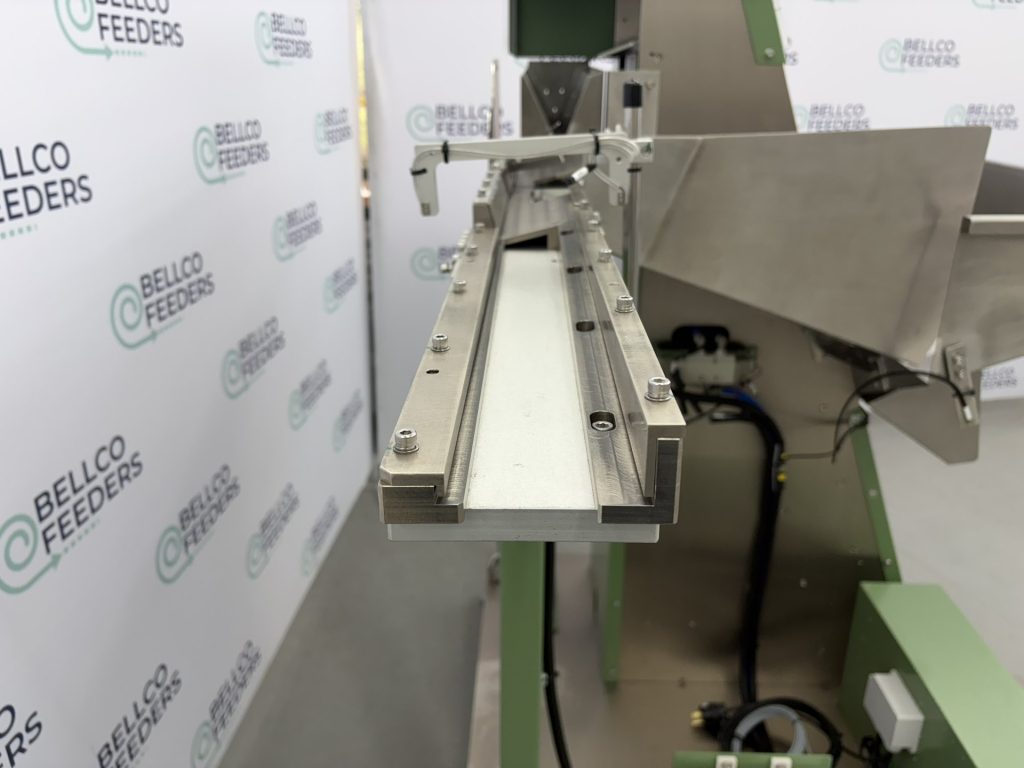
The standard answer, and the one on most systems we ship. An electromagnetic drive moves parts along a track profile machined to your part geometry, holding orientation the whole way. Compact, no moving parts to wear, and it doubles as your accumulation buffer. Best for small and medium parts where a few milliseconds of speed variation doesn't matter.
Belt Conveyor
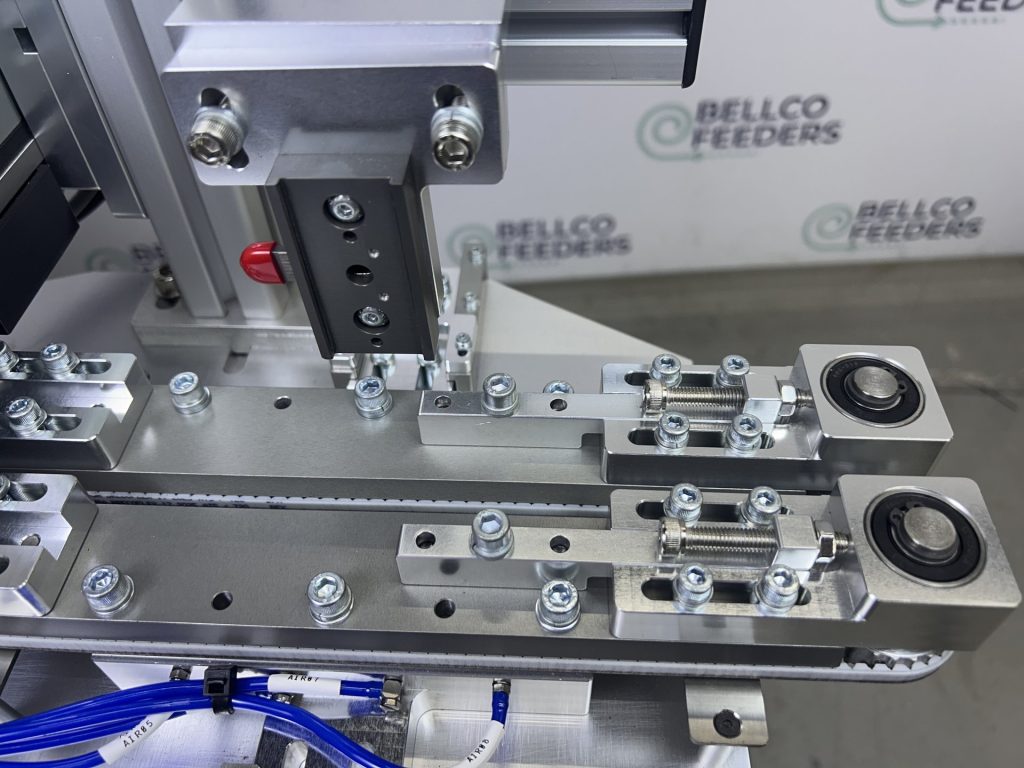
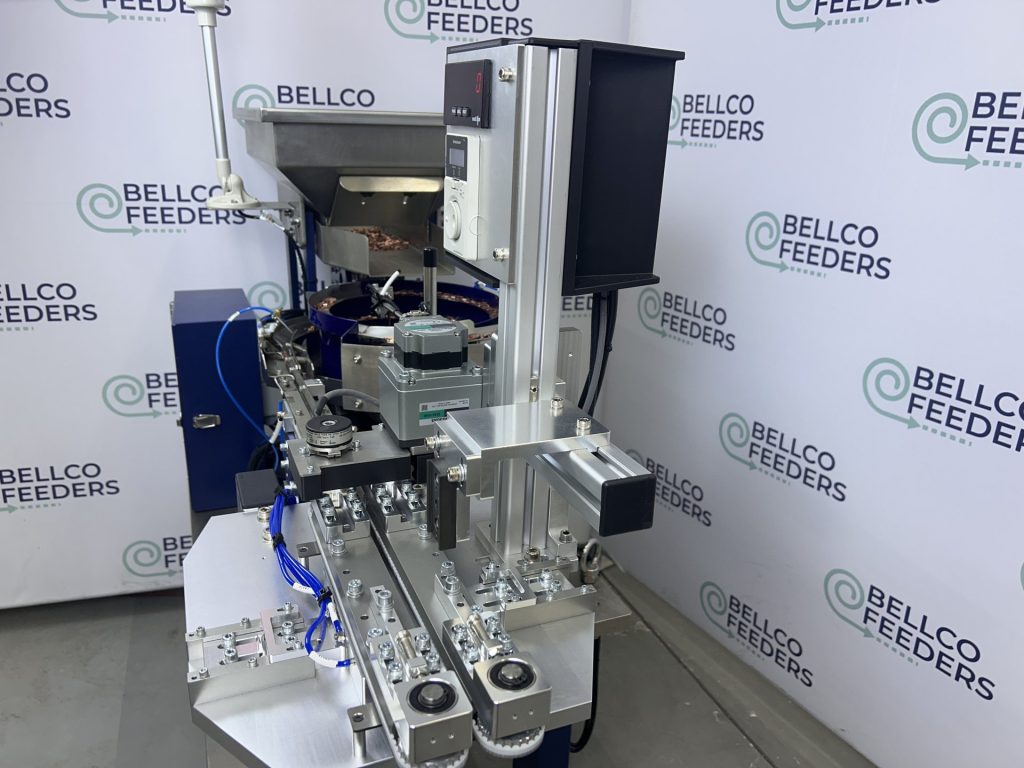
When a vibratory track can't give you what the process needs. A vibratory track moves parts by friction and part-to-part contact, so trailing parts always run slightly slower than leading ones. A belt runs at a fixed motor-controlled velocity, which is what a sensor-triggered downstream process actually requires. Also the gentler choice for cosmetic parts, since there's no tumbling or part-on-part contact.
Air Track
Air jets move the part along the track instead of vibration. Quieter, gentler, and the right answer for lightweight parts, cleanroom environments, and anywhere a vibrating track would be a problem for the process next to it.
Engineering Detail
When the Process Needs a Fixed Velocity
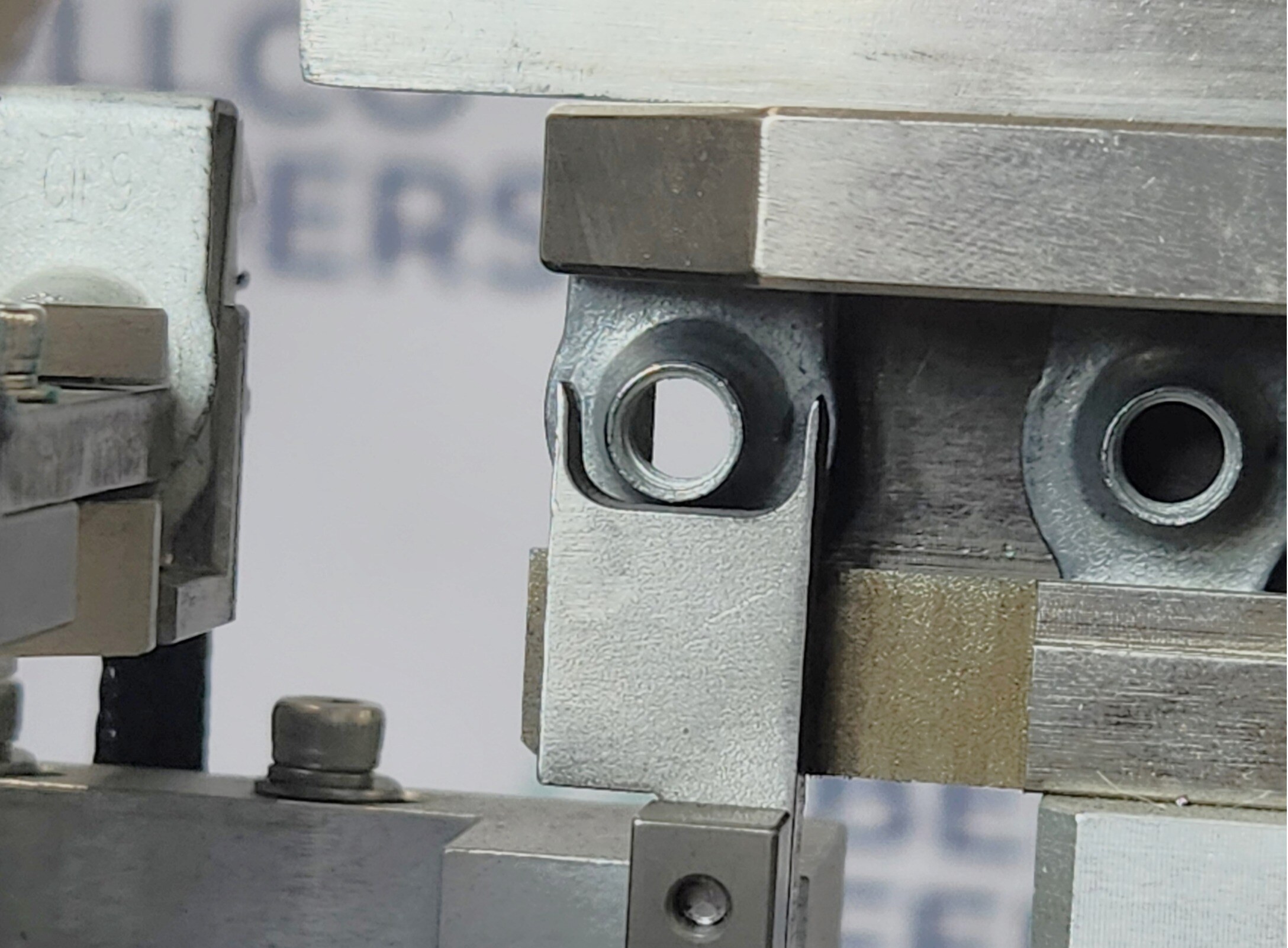
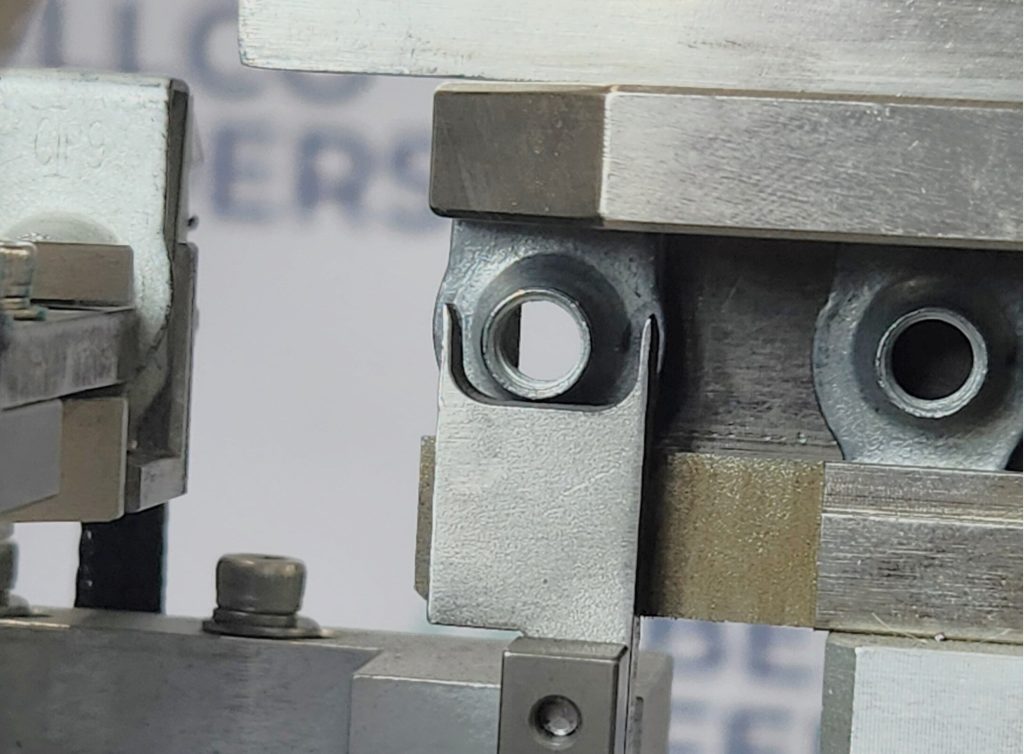
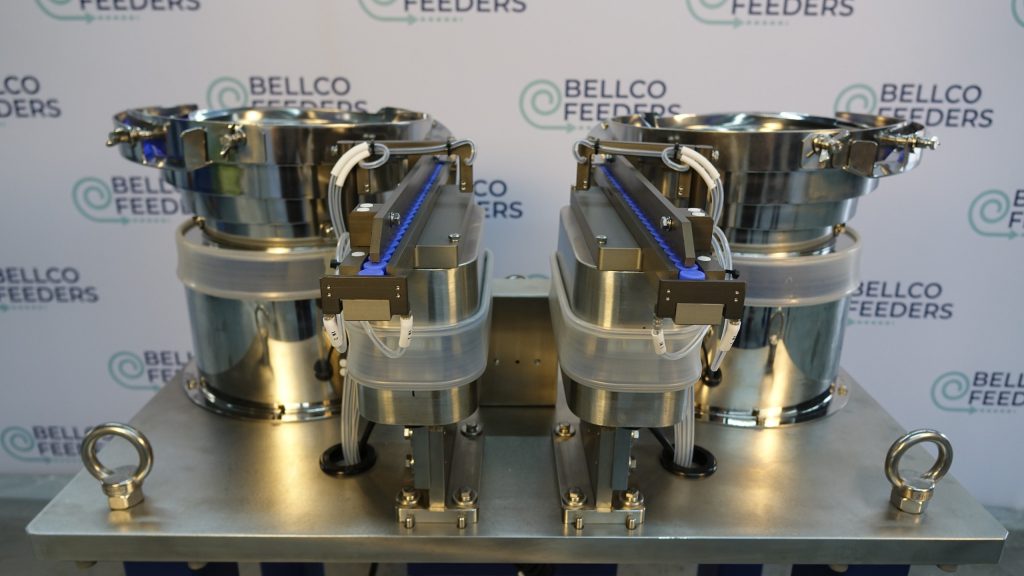
Built for a customer dispensing brazing paste onto copper ring terminals at 120 parts per minute across eight variants — an application where a few milliseconds of speed variance is the difference between a good braze and a reject.
Why It Matters
The Buffer Is the Point.
A linear feeder isn't only transport. It's the queue that guarantees a part is waiting the instant your robot or operator reaches for one.
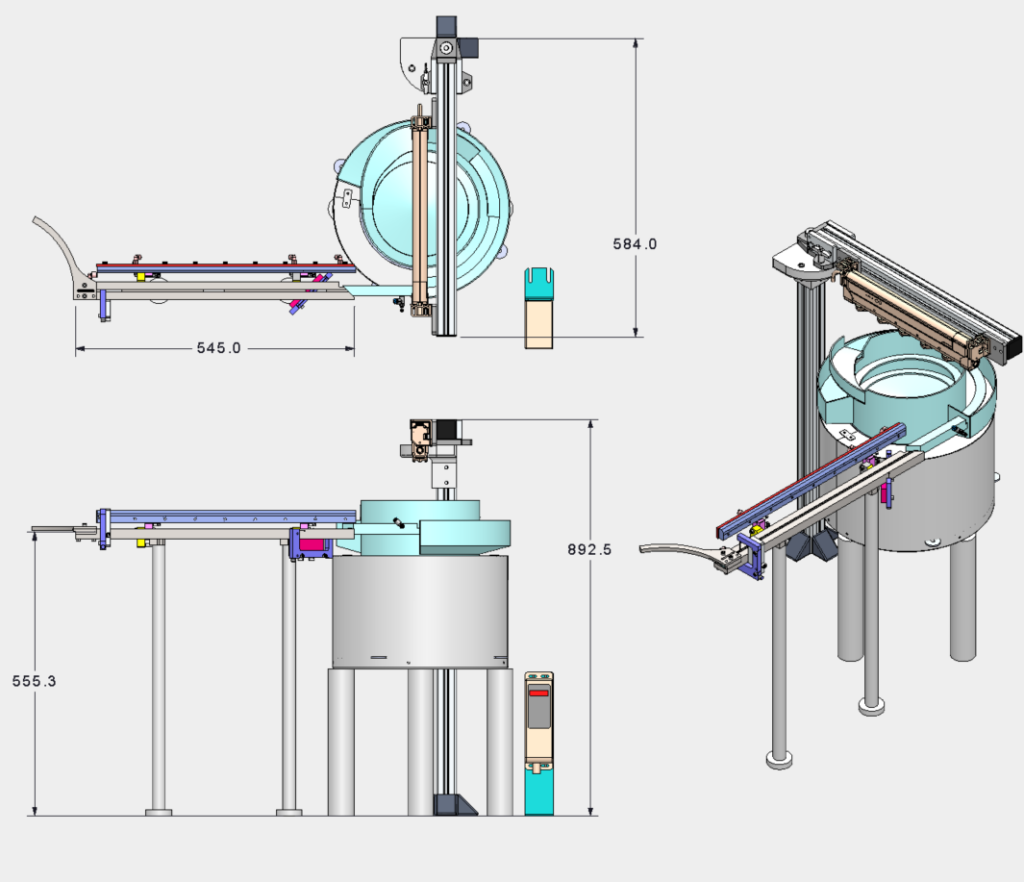
Size the track too short and the bowl can't keep up with a burst, so the pick point starves and your cycle time goes with it. Size it right and the bowl can run intermittently while the track always holds parts ready. We calculate track length against your actual feed rate and cycle time, and we build in a full-track sensor that shuts the bowl off when the queue is full — so parts aren't sitting under vibration longer than they need to be.
Track extensions are available in 24-inch increments if the layout changes later.
Real Systems, Shipped
Linear Feeders In Production
120 PPM
8 variants, no retooling
Electrical Components
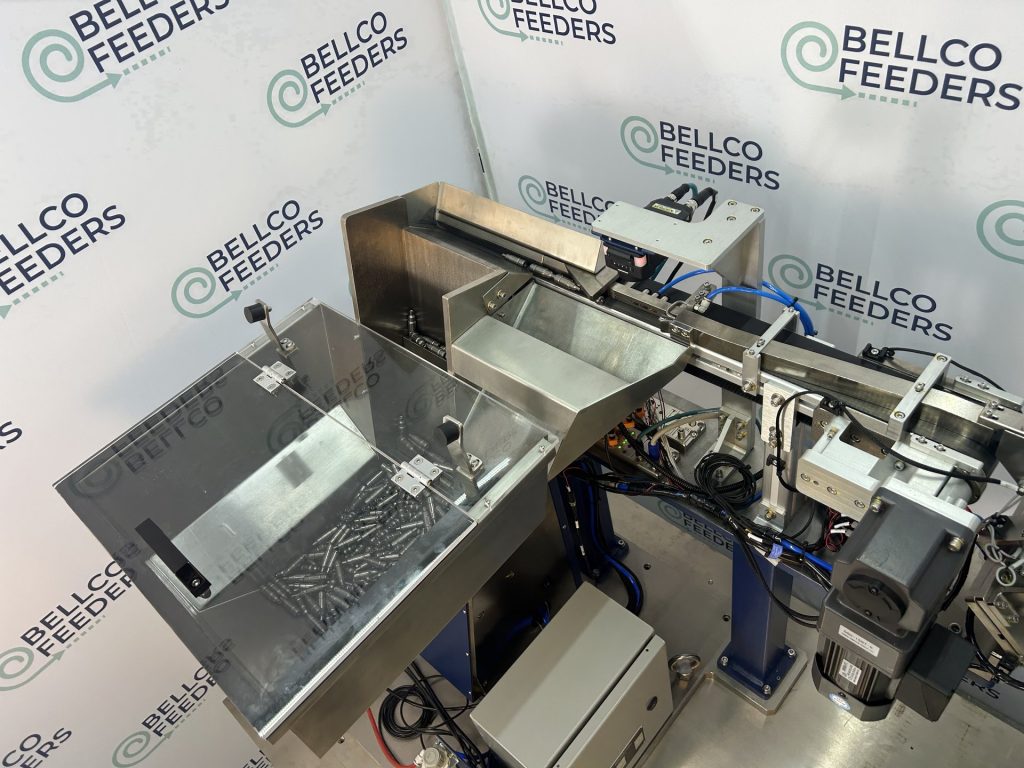
Dual-Belt Linear Transfer Locks Brazing Paste Timing
A 500mm polyurethane-coated bowl orients copper ring terminals barrel-trailing onto a 355mm flat track, then hands them to a Bellco-built dual-belt conveyor that holds every part at the same velocity past the paste dispenser. 120 PPM across 8 variants, no retooling.
 33 PPM
Left or right escape
Precision Machining
Flat-Belt Transfer Into a Dual-Stage Escapement
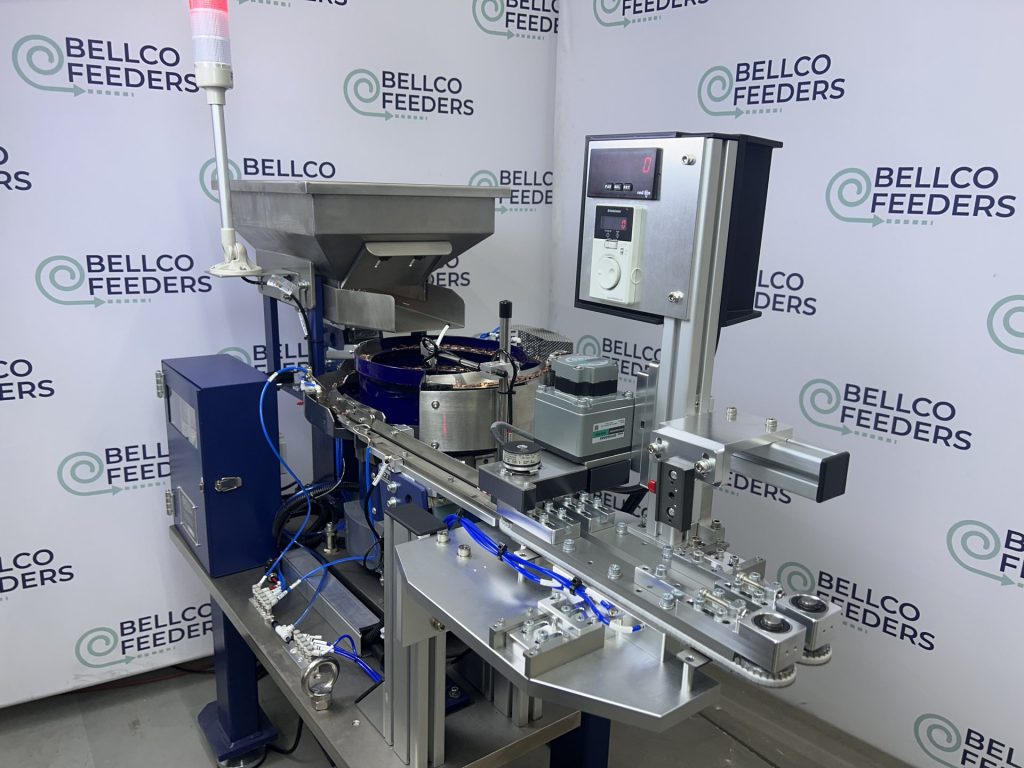
A Bellco-built flat-belt linear transfer carries tapered tubes from a step feeder into a custom pneumatic escapement that pitches parts left or right on PLC command. 33 PPM, left or right escape.
33 PPM
Left or right escape
Precision Machining
Flat-Belt Transfer Into a Dual-Stage Escapement
A Bellco-built flat-belt linear transfer carries tapered tubes from a step feeder into a custom pneumatic escapement that pitches parts left or right on PLC command. 33 PPM, left or right escape.
Engineered in Concord Township
Linear Feeders Up Close
 01 / 09
Common Questions
Linear Feeder FAQs
What is a linear feeder?
A linear feeder carries oriented parts in a straight line from a bowl or step feeder exit to the pick point, holding their orientation the whole way and creating a buffer so a part is always ready. It’s the link between the feeder and the process.
What's the difference between a linear feeder and a conveyor?
A vibratory linear feeder moves parts by controlled vibration along a track machined to your part profile. A belt conveyor carries them at a fixed motor-controlled speed. The vibratory track is more compact and holds orientation more tightly; the belt gives you constant velocity and gentler handling. Which one you need depends on whether your downstream process cares about exact timing.
When do I need a belt instead of a vibratory track?
When the process downstream is triggered on timing rather than on a sensor, when part-on-part contact would mark a cosmetic finish, or when a part is too heavy to move well by vibration. If a vibratory track will do the job, we’ll tell you — it’s usually the cheaper answer.
How long should my linear track be?
Long enough to buffer against your peak demand. We calculate it from your feed rate and cycle time rather than picking a catalog length, and extensions are available in 24-inch increments if the layout changes.
Do you sell linear feeders separately from the bowl?
Yes, though most go out as part of a complete system. If you have a bowl already and need a track engineered for your part, send us the part and the outfeed geometry.
Can a linear feeder handle more than one part variant?
Often, yes — either with an adjustable track profile or with quick-change tooling. Which approach is more reliable depends on how different the variants are; we’ll quote both and give you an honest read on the tradeoff.
Ready to Start?
Let's Engineer Your Linear Feeder.
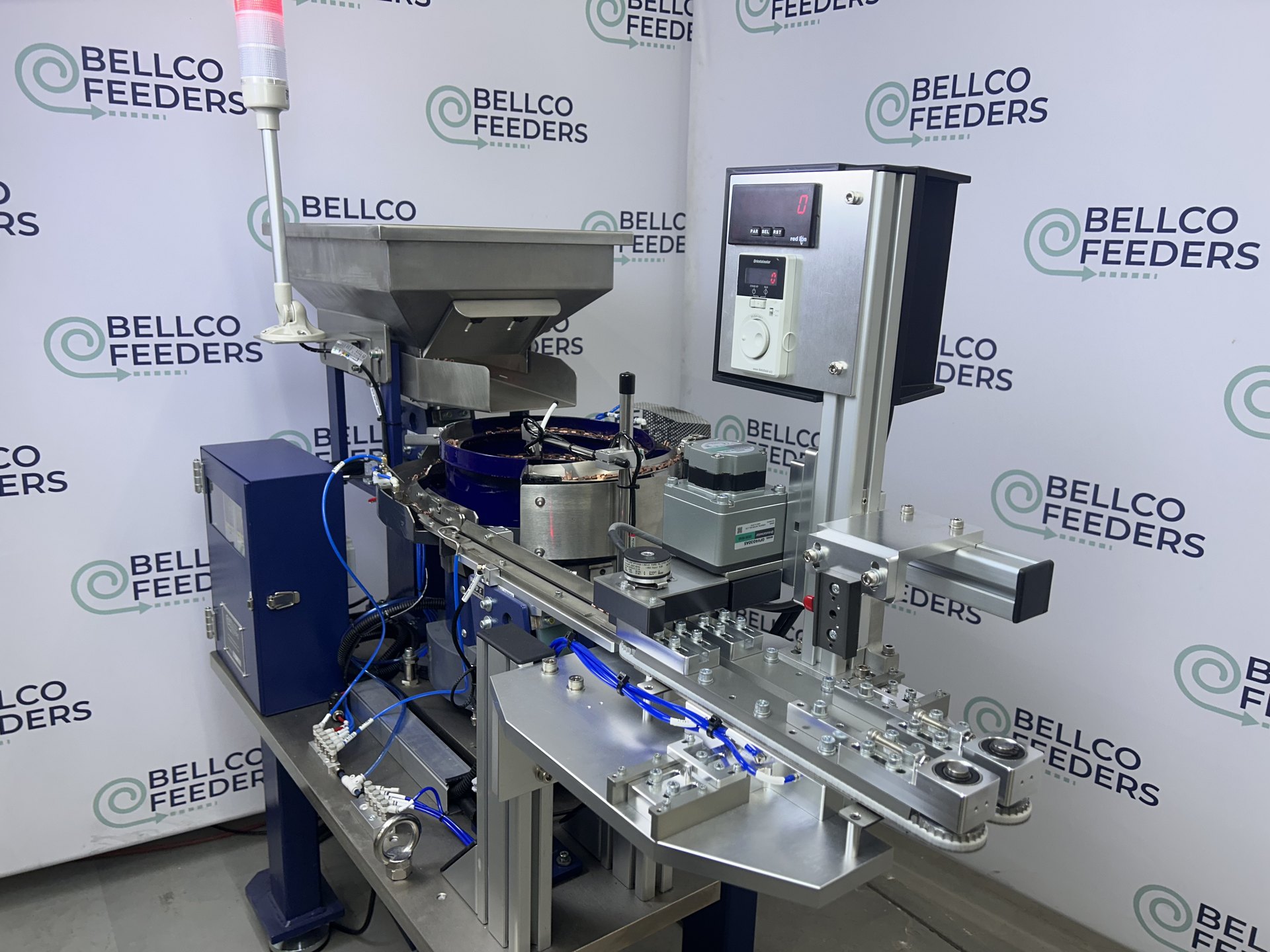
Tell us the part, the rate it has to hold, and what happens to it downstream. If a standard vibratory track will do the job, we'll say so — and if it won't, we'll build you something that does.
Talk to an Engineer
- Quote Turnaround
- 3 business days
- Design Review
- SolidWorks model before build
- FAT Video
- Included on every system
- Documentation
- Full SolidWorks model included
- Location
- Concord Township, Ohio