
Components & Accessories
Custom Blow Feeding
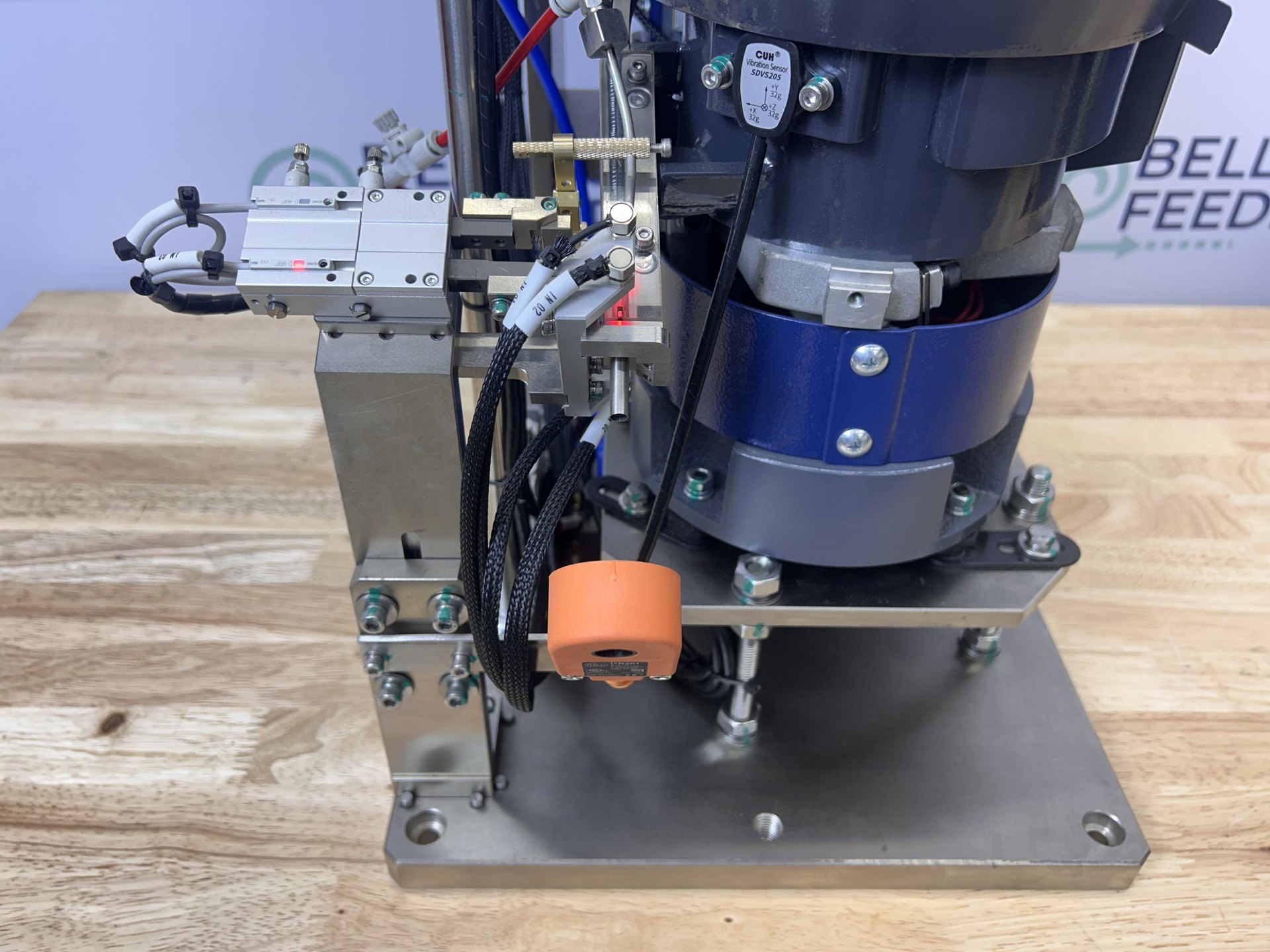
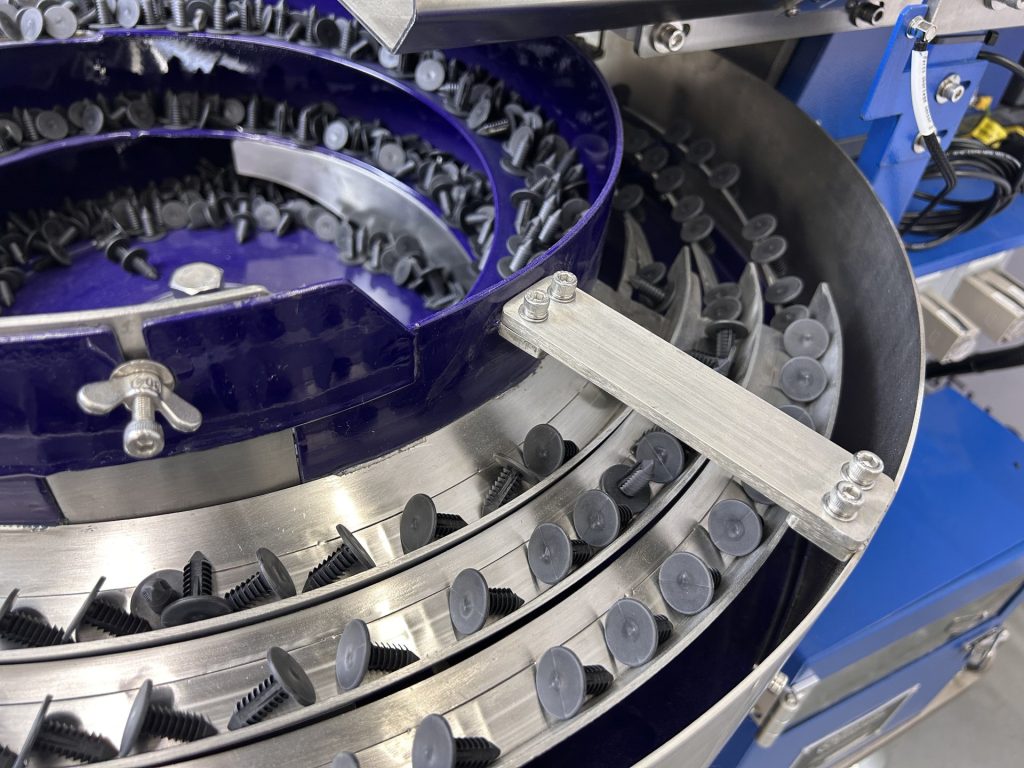
Blow feeding delivers a singulated part through a tube by compressed air — straight to the point of assembly, up to 25 feet away, with no robot and no track to get there. We build the feeder, the escapement, and the tube. You keep your driver.
 01 / 05
How It Works
How Does a Blow Feeder Work?
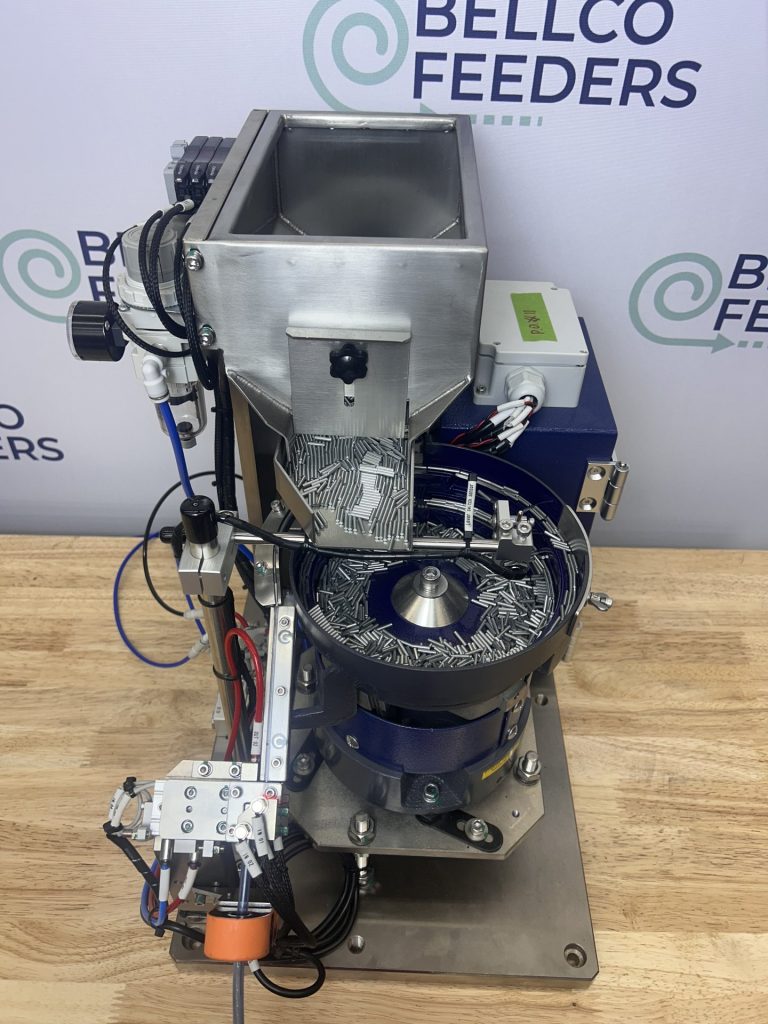
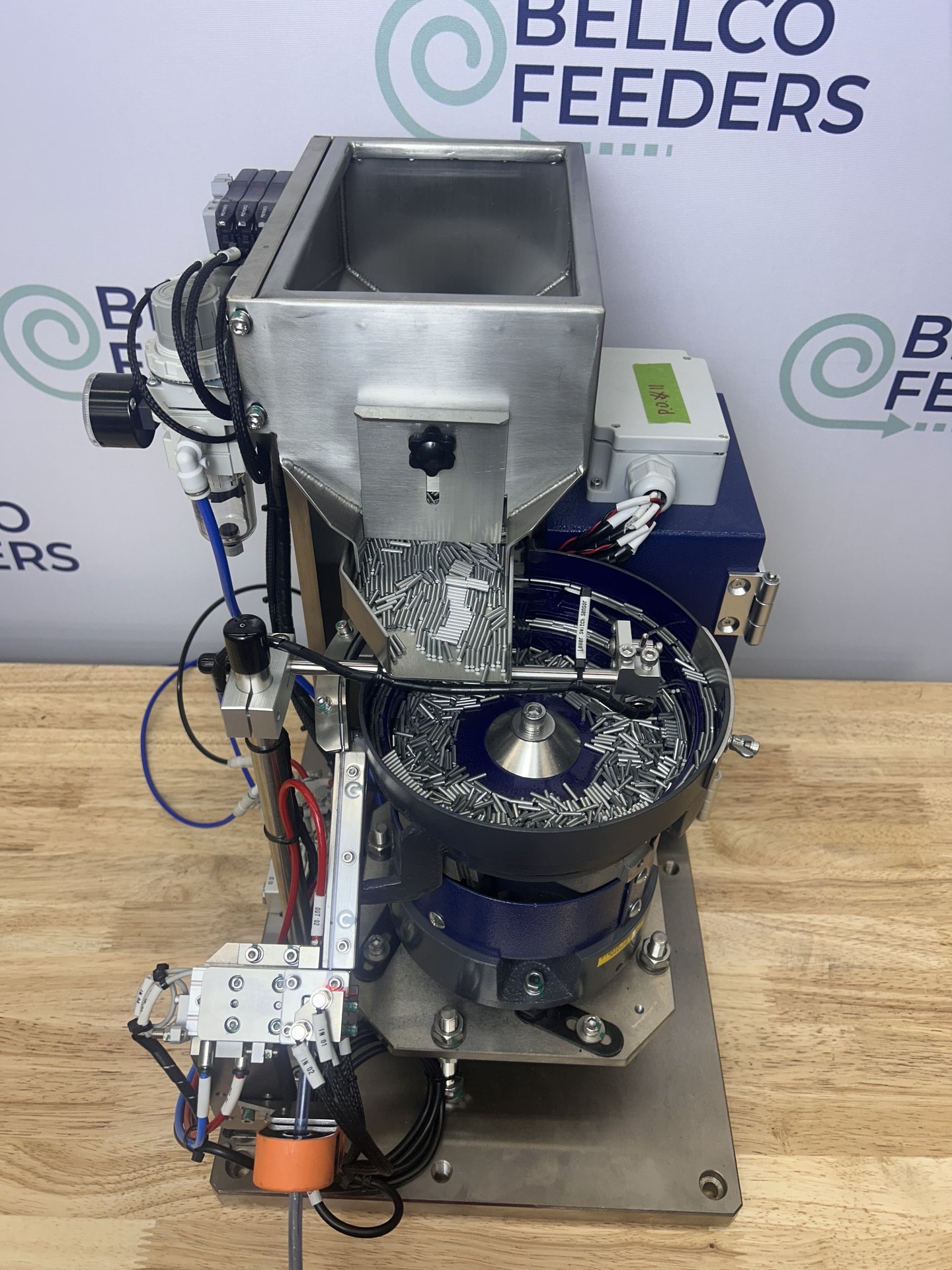
A bowl or step feeder orients your parts and delivers them single-file to an escapement. The escapement releases one part into a tube, and a pulse of compressed air carries it down the tube to the point of assembly — a driver, a nest, a fixture, or your own tooling. The part arrives oriented and ready, and the cycle repeats on your signal.
The reason to blow feed instead of running a track: the assembly point is somewhere a track can't reach. Behind a fixture, above the work, on the other side of the cell, or on a driver that moves. Air doesn't care about the geometry in between.
Scope of Supply
We Feed Your Gun. We Don't Replace It.
Bellco supplies the feeder, the escapement, the sensors, and the delivery tube. We don't supply the driving head — no screwdriver, no torque gun, no proprietary end unit.
That's deliberate. Most plants have already standardized on a driver brand and a torque controller, and the last thing an integrator needs is a feeder vendor forcing a different head into the cell. Our tube marries up to whatever you're running — your gun, your collet, your nest, your fixture.
You keep your driver, your controller, and your plant standard. We get the part to it, oriented, every cycle.
Verification
Two Sensors. Not One.
Most blow feed systems confirm that a part left the escapement. That tells you a part was released — not that it arrived.
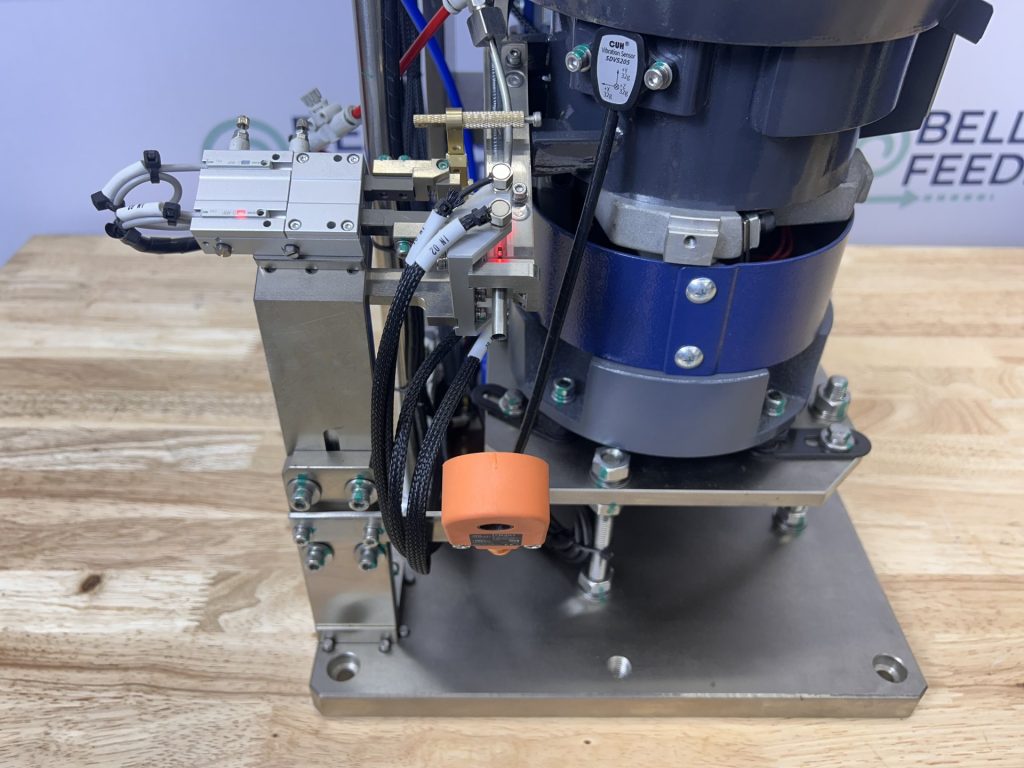
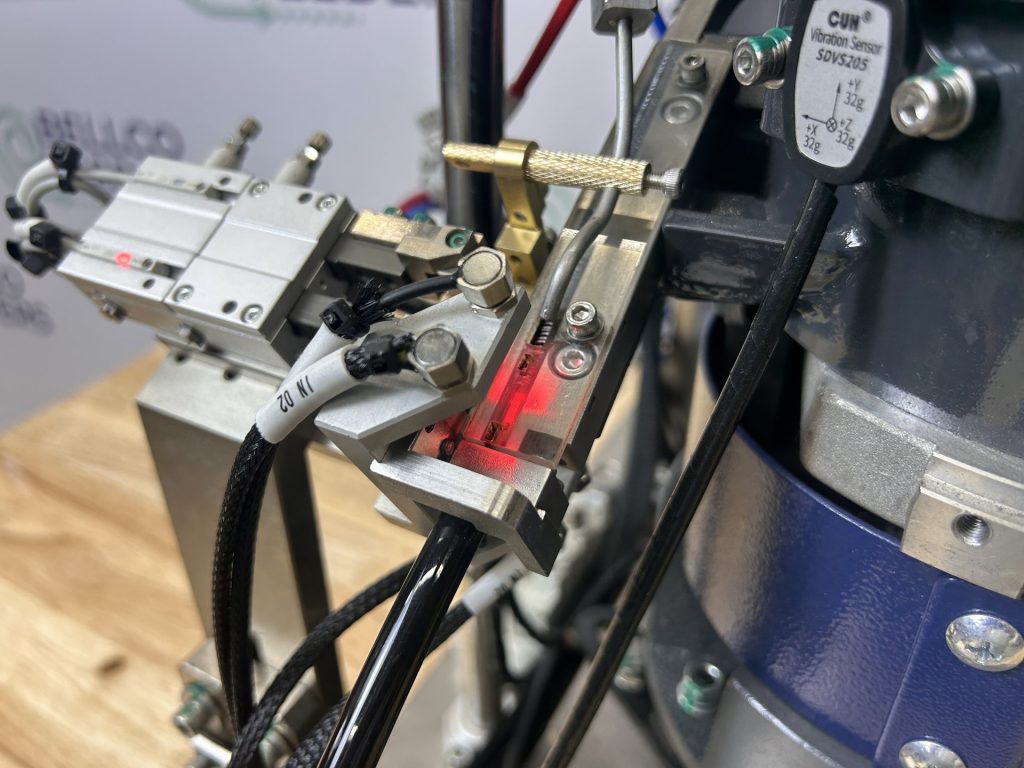
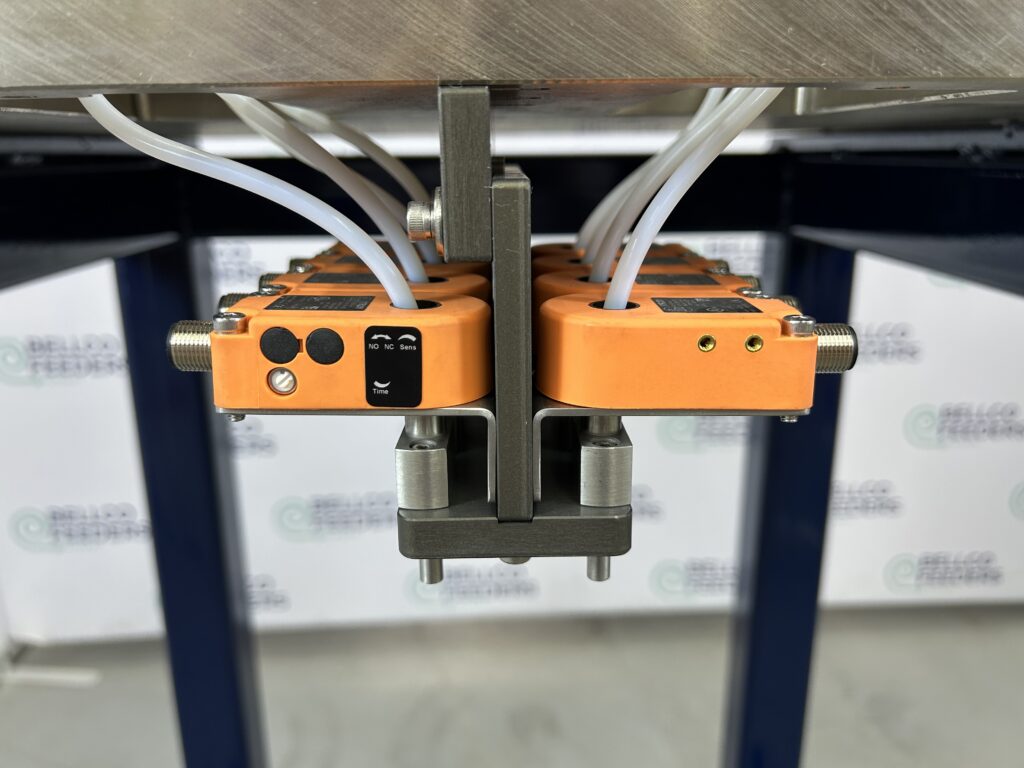
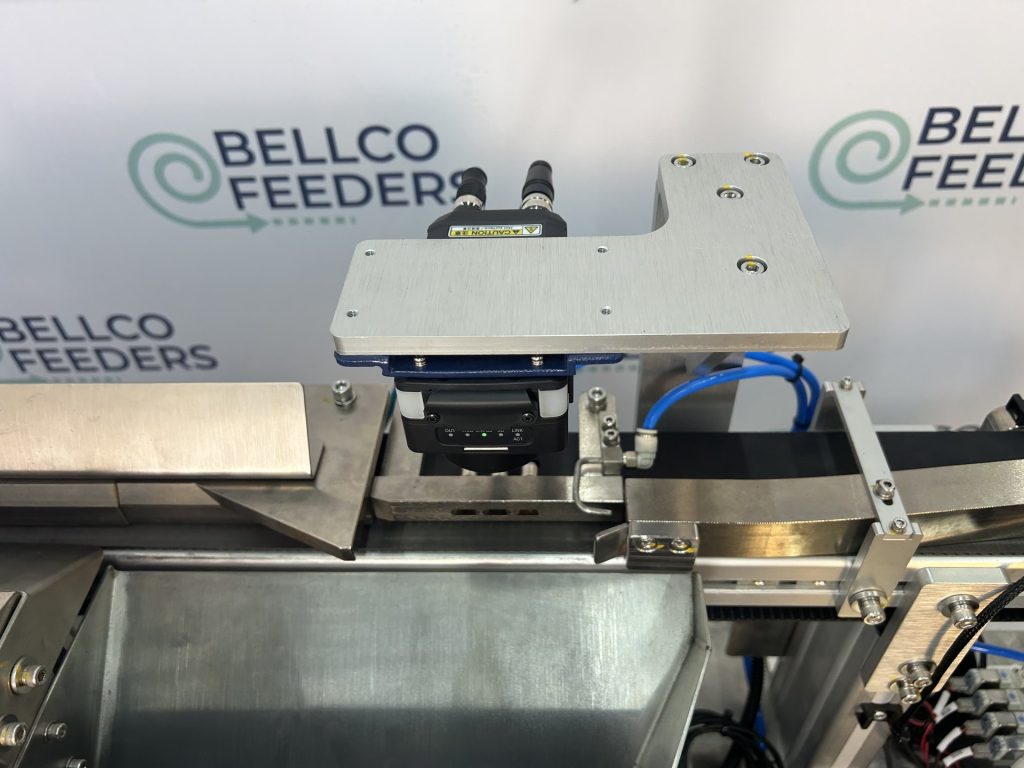
Every Bellco blow feeder carries two sensors: one at the escapement confirming a part was singulated and released, and a second on the tube confirming it actually transited. If a part hangs up between the two, you know before the driver cycles instead of after.
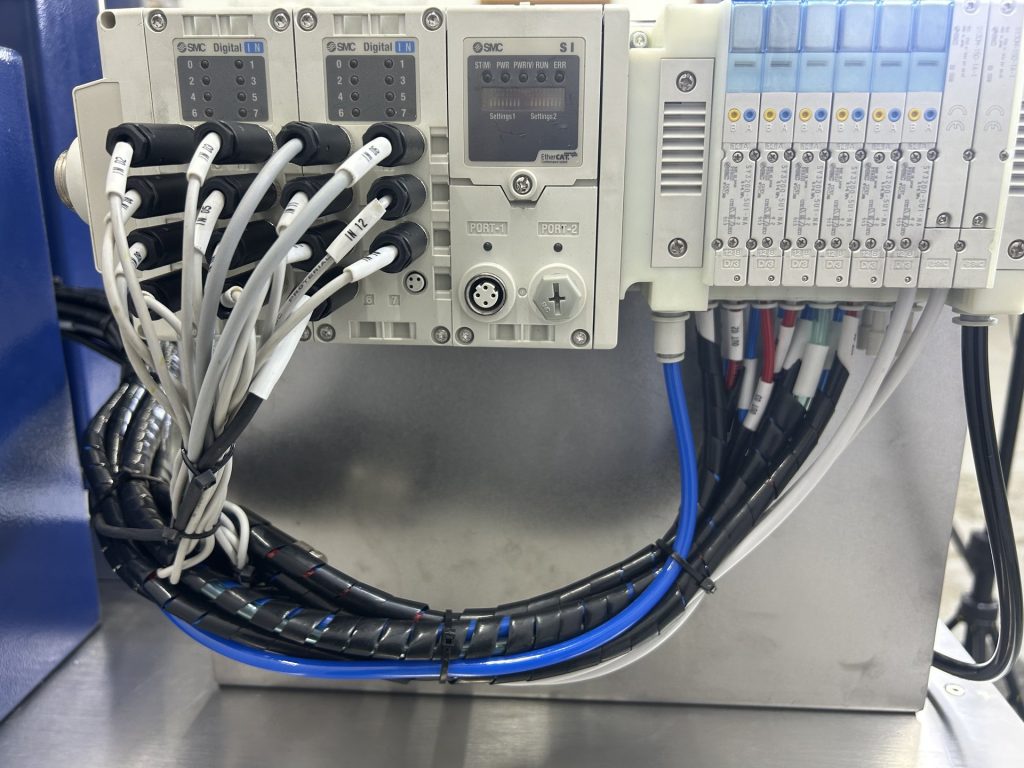
Both sensors wire into an Ethernet I/O block — plug in Ethernet and power. We use Keyence sensors and SMC pneumatics as standard, and we'll switch to whatever your plant has standardized on.
Tubing & Applications
Built Around Your Part.
Round Parts, Square Parts, Your Part.
Blow feed tubing is usually round because fasteners usually are. Plenty of parts aren't.
We build custom tube profiles to match the part — including square tube for square and rectangular parts, so the part can't rotate in transit and arrives at the assembly point in the orientation it left in. Tube length runs up to 25 feet on systems we've delivered, and longer on request.
It's Not Just Screws.
Screws and threaded fasteners are the most common blow feed application, and we do a lot of them. But anything that can be singulated and will travel cleanly through a tube is a candidate — springs, pins, rivets, standoffs, small stampings, and molded components among them.
Send us the part. If it will blow feed, we'll tell you. If it won't, we'll tell you that too, and point you at what will.

Will It Feed?
What Makes a Part a Good Blow Feed Candidate
Blow feeding works when a part travels nose-first down a tube without tumbling or wedging. A few things determine whether yours will:
Send Us a Handful of Samples
These are guidelines, not a specification. Parts that look marginal on paper often feed fine, and parts that look easy sometimes don't. Send us a handful of samples and we'll run them — that's the only answer worth relying on.
The Alternative
If It Won't Blow Feed, It Still Needs Feeding.
Some parts will never travel well through a tube — too short relative to their head, too large, too delicate, or too irregular. That's not the end of the conversation.
A screw presenter or a pick-point escapement solves the same problem differently: instead of firing the part to the assembly point, we present it, singulated and oriented, in a fixed position for a robot or an operator to take. Same feeder, same orientation work, different hand-off.
Engineered in Concord Township
Blow Feed Systems Up Close
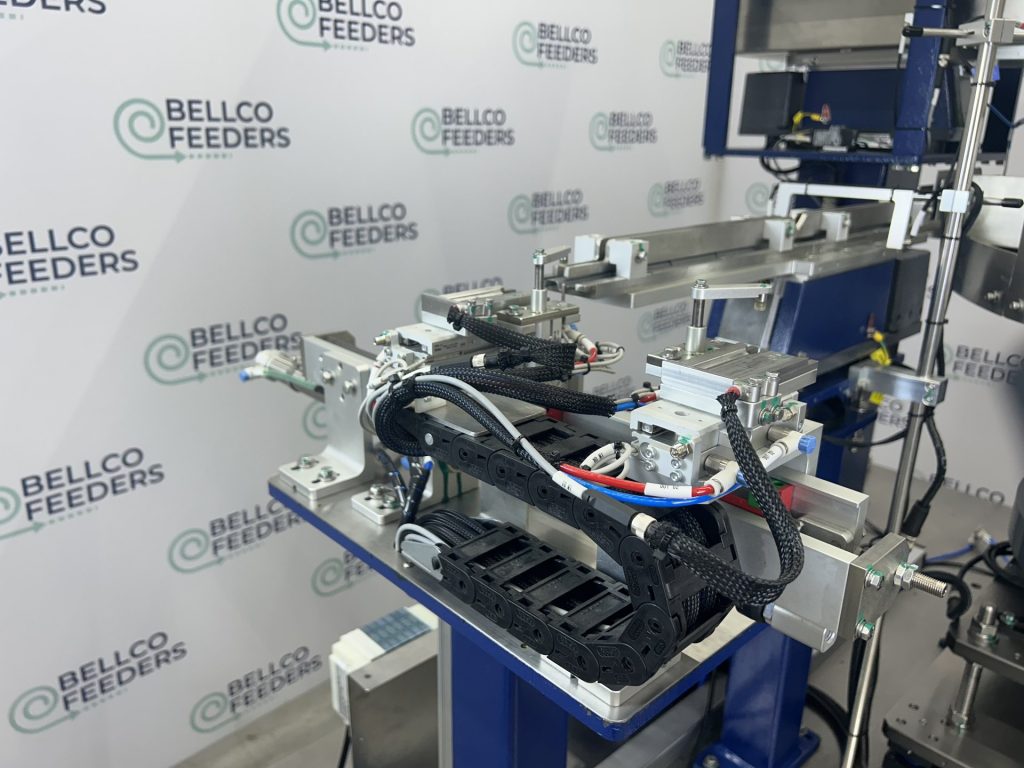
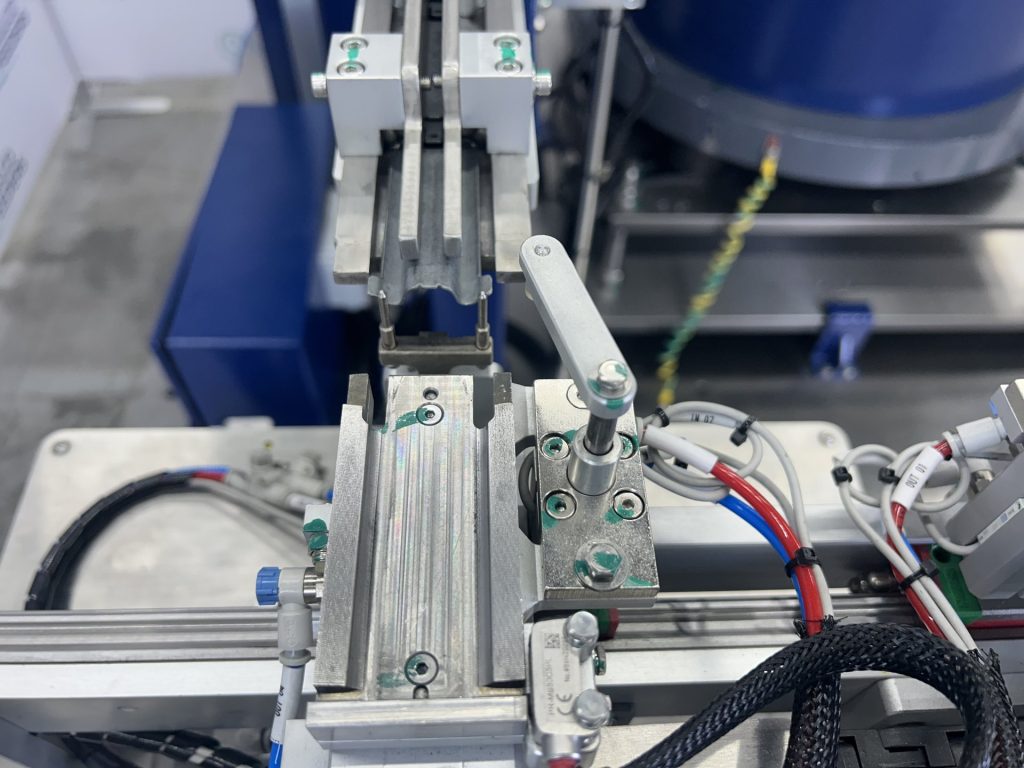
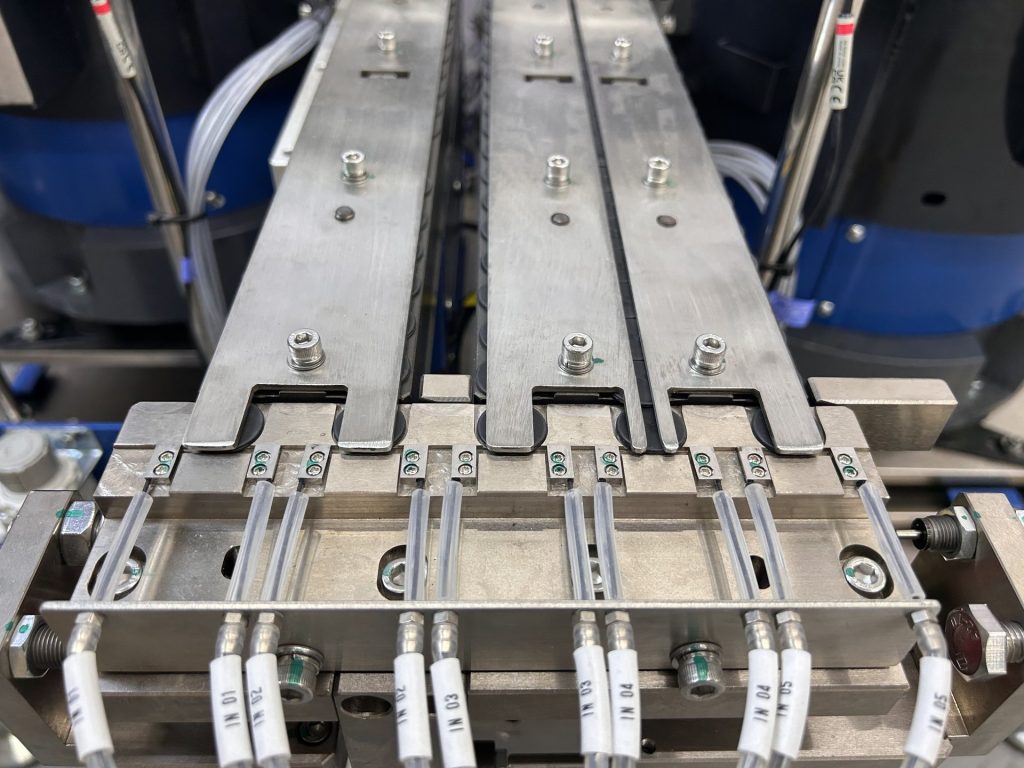 01 / 09
Common Questions
Blow Feeding FAQs
What is a blow feeder?
A blow feeder delivers a singulated, oriented part through a tube using compressed air, from a vibratory bowl or step feeder to the point of assembly. It’s used when the assembly point is somewhere a linear track or a robot can’t practically reach.
Do you supply the screwdriver or driving head?
No, and that’s by design. We supply the feeder, escapement, sensors, and delivery tube. The tube marries up to your existing gun, collet, nest, or fixture, so you keep the driver and torque controller your plant has already standardized on.
How far can a blow feeder deliver a part?
We’ve delivered systems with tube runs up to 25 feet, and we’ll quote longer on request. In practice the limiting factor is usually bend radius rather than distance — a long gentle run feeds better than a short path with a tight elbow.
Can you blow feed parts that aren't round?
Yes. We build custom tube profiles, including square tube for square and rectangular parts, so the part can’t rotate in transit and arrives in the orientation it left in.
How do I know the part actually made it through the tube?
Two sensors. One at the escapement confirms a part was singulated and released; a second on the tube confirms it transited. If a part hangs up in between, you know before the driver cycles.
Can you use our sensor and pneumatic brands?
Yes. Keyence and SMC are our standards, but if your plant has standardized on something else we’ll build to it.
Do you provide the PLC or the controls program?
The escapement sensors and valves wire into an Ethernet I/O block, so integration is plug in Ethernet and power. We write a test program to prove the system in full auto mode at the factory acceptance test, but the PLC and the production program stay with your controls team. We’re happy to support them through integration.
What's the lead time on a blow feed system?
Same as our bowl feeder systems, typically 12–14 weeks from design approval, with expedite options available. Quotes come back in 3 business days.
Ready to Start?
Let's Engineer Your Blow Feed System.
Send us the part, the gun or fixture it has to reach, and how far away it sits. We'll tell you whether it will blow feed — and if it won't, what will.
Talk to an Engineer
- Quote Turnaround
- 3 business days
- Design Review
- SolidWorks model before build
- FAT Video
- Included on every system
- Documentation
- Full SolidWorks model included
- Location
- Concord Township, Ohio