Components & Accessories
Vision-Guided Feeding
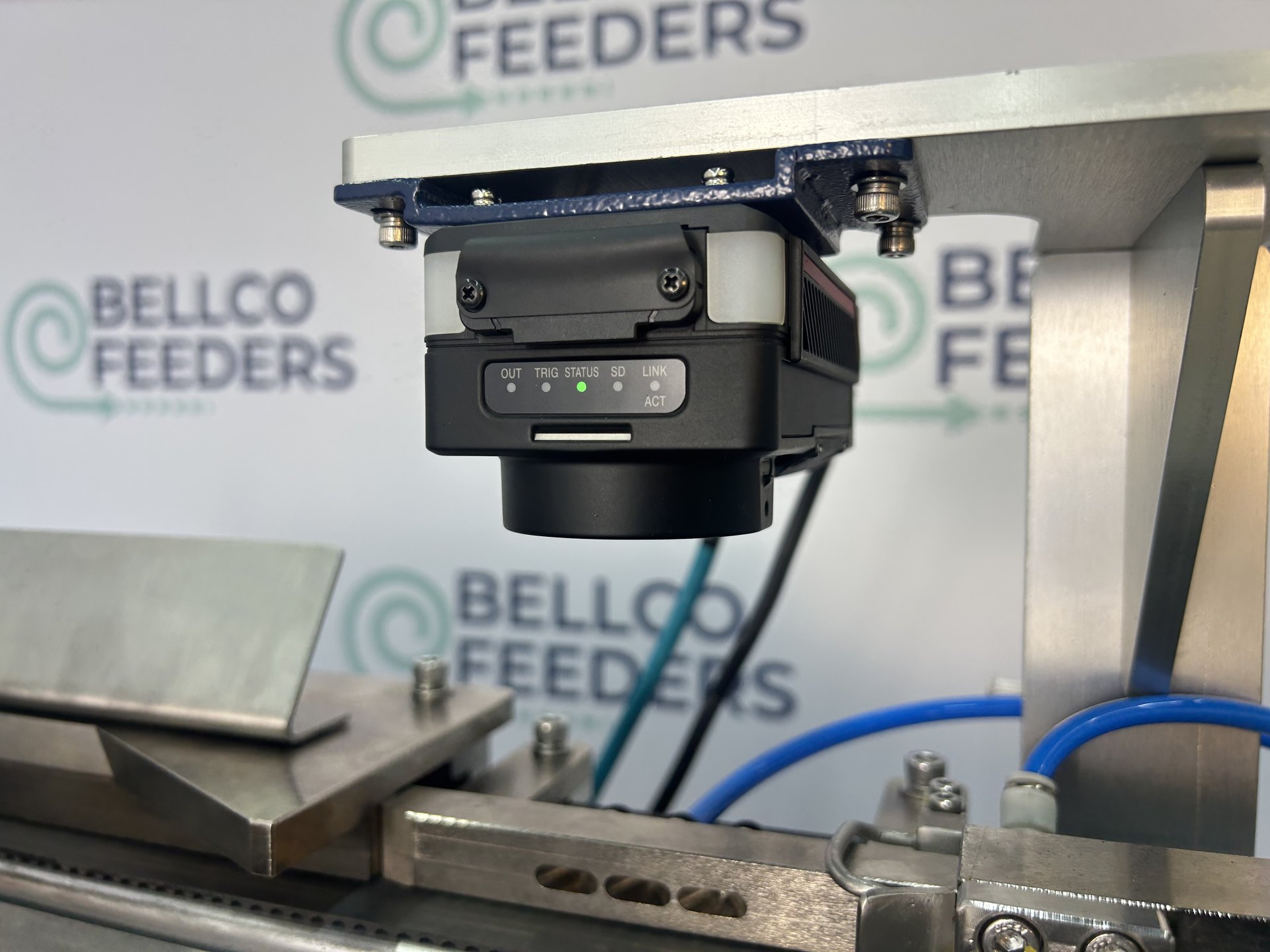
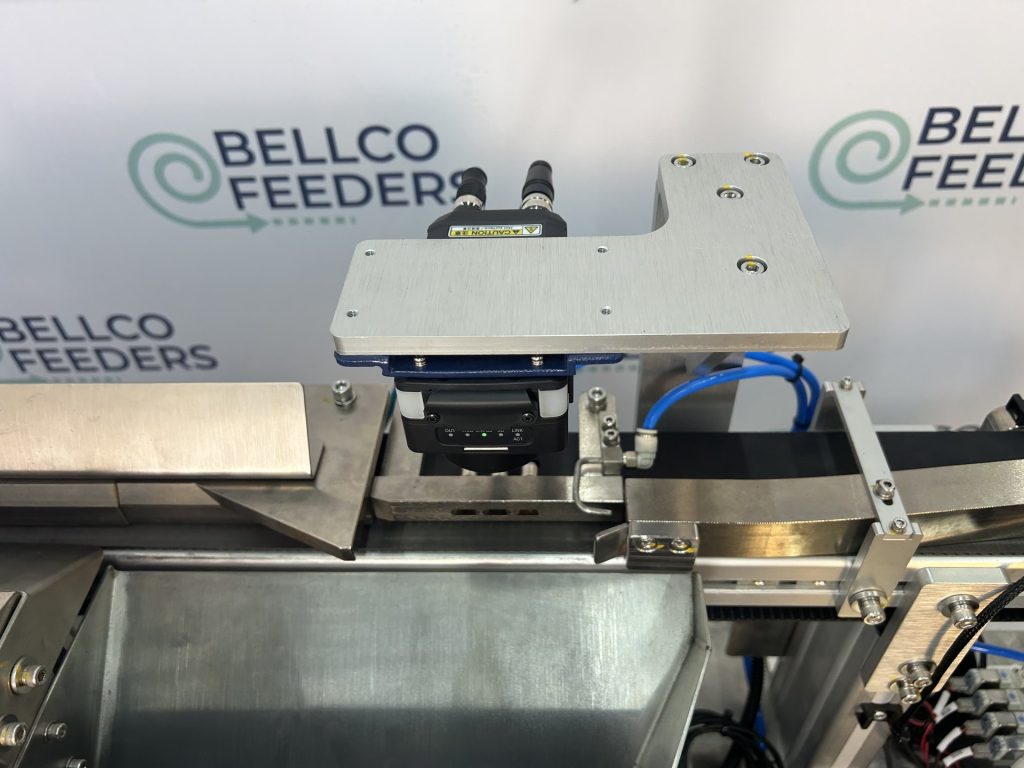
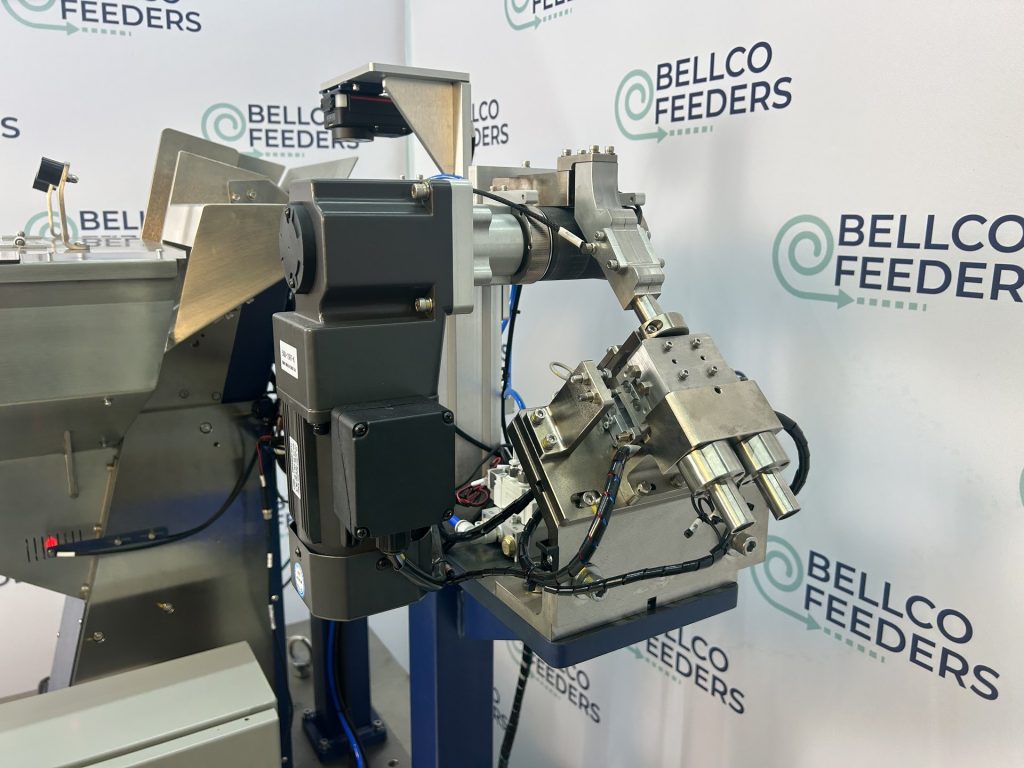
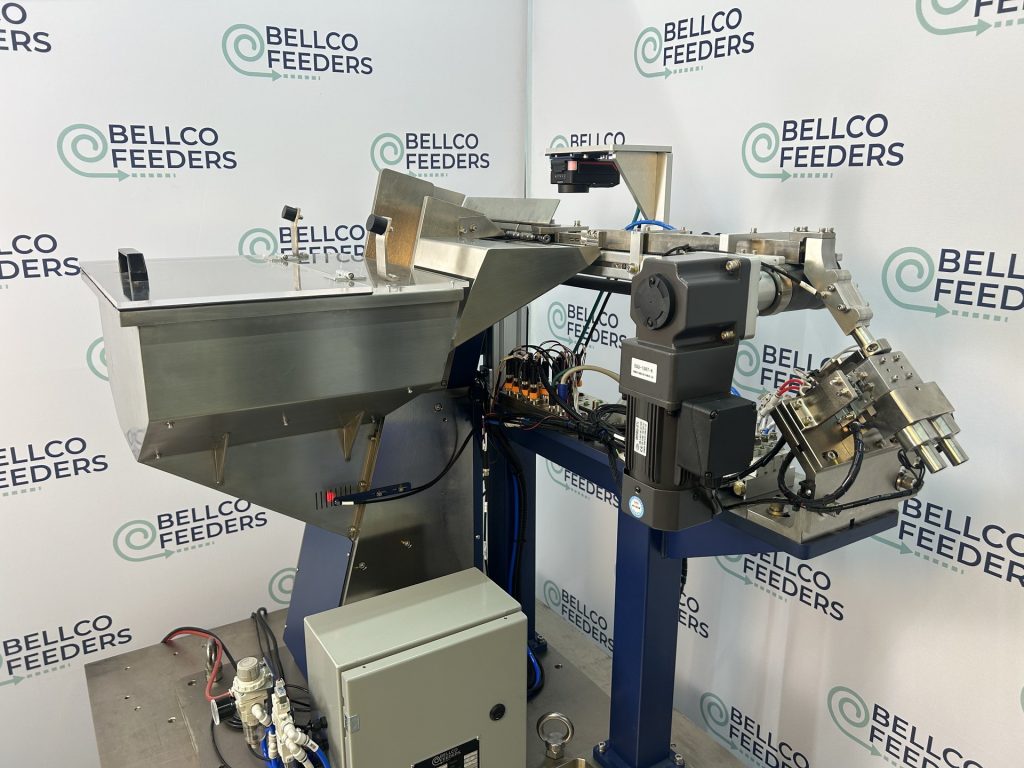
Some parts are too subtly asymmetric for mechanical tooling to tell one end from the other. A camera over the track reads each part in flight, and anything facing the wrong way is purged back to the hopper before it reaches your robot.
 01 / 05
How It Works
Four Parts To A Vision-Guided Feeder
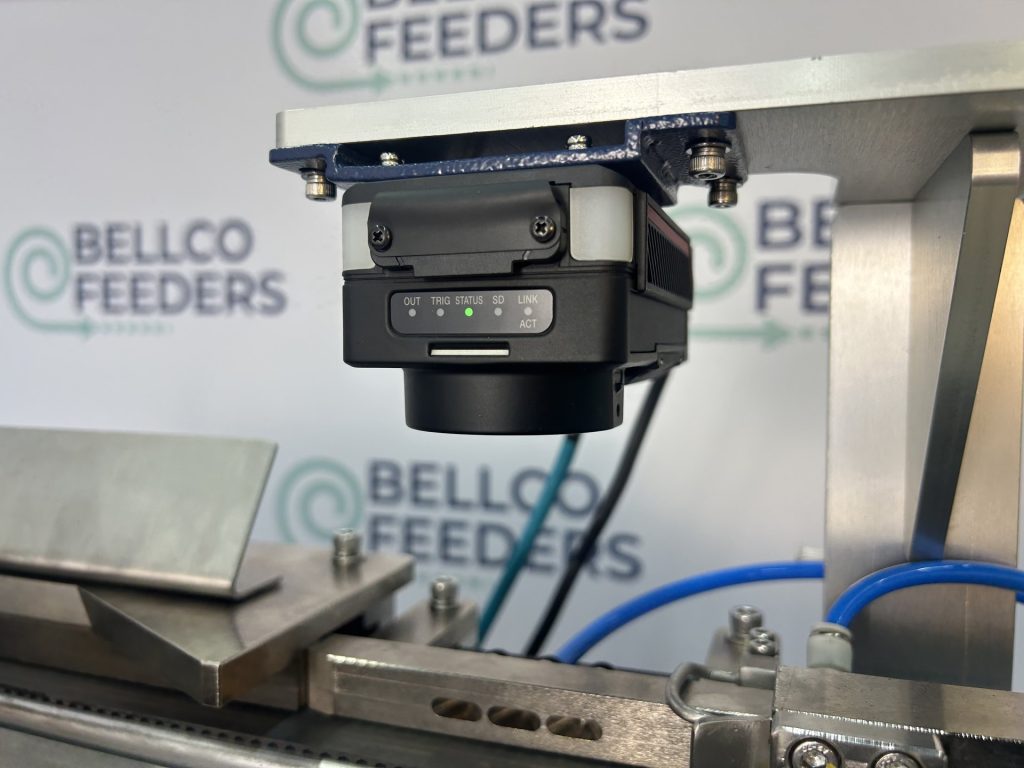
Camera Over The Track
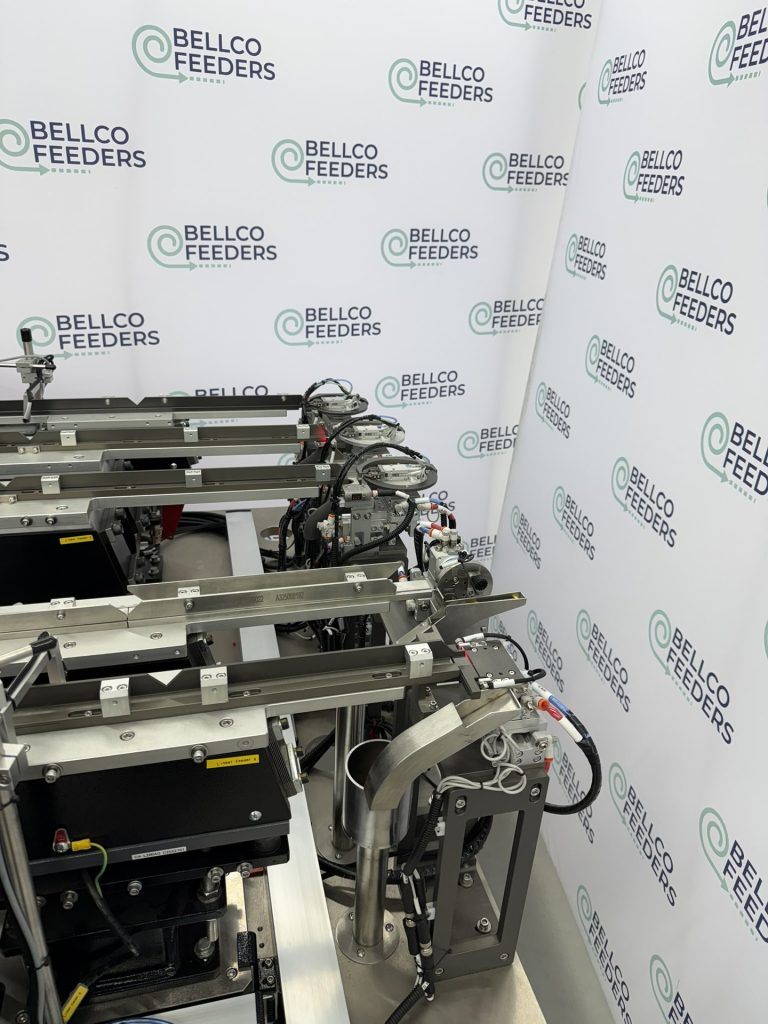
A Keyence IV-series camera mounts above the linear track and inspects each part as it travels, identifying which end is leading. Mounting and programming are included.
Purge Gate For Rejects
A gate near the escapement diverts mis-oriented parts back to the hopper for recirculation. Nothing is scrapped — it simply goes round again.
Escapement That Finishes The Job
Vision decides which parts pass; the escapement presents them. On one system a custom rotary escapement rotates each pin from horizontal to vertical so the robot picks it in final assembly orientation.
The Control Cabinet Comes With It
Vision needs more than a camera. We supply the cabinet, the power supply, a mini PLC and all the wiring and programming, so what arrives is a turnkey feeder and not a parts list.
Real Systems, Shipped
Vision In Production
 3 PPM
Every one correct
Machine Integration
Telling Two Near-Identical Ends Apart
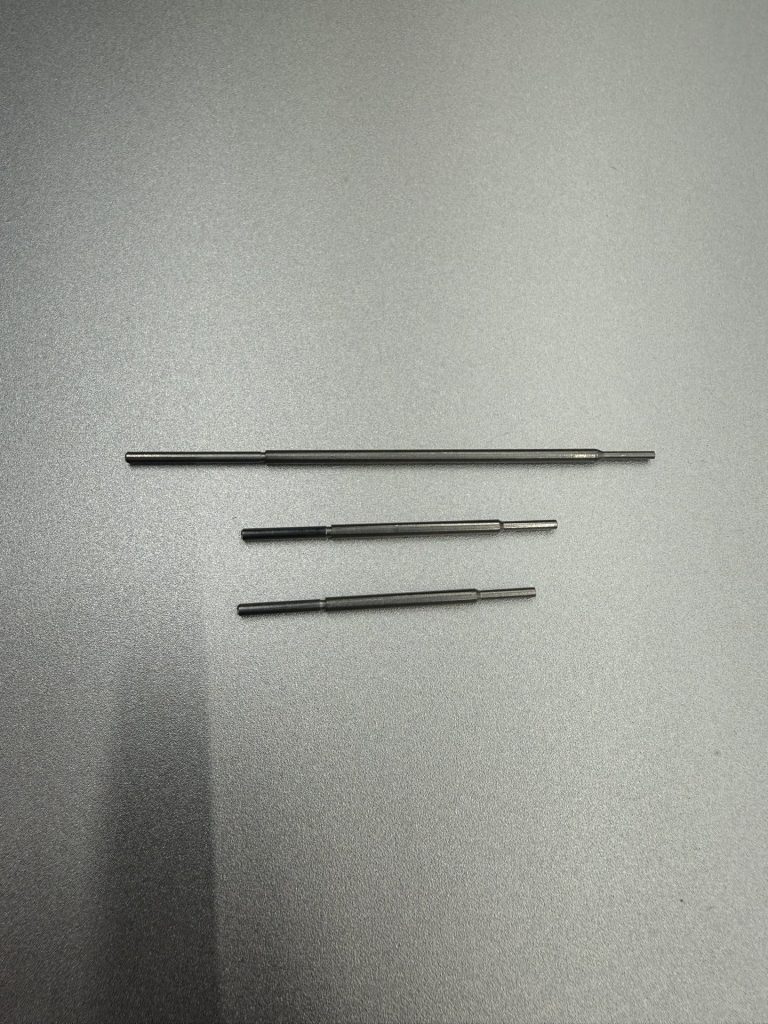
Three sizes of actuator pin, each with a tapered end and a cylindrical end, all the same diameter. Standard tooling could not reliably distinguish them. A Keyence IV camera plus a purge gate meant the robot only ever saw correctly-oriented parts.
33 PPM
IV-4 in-flight check
Precision Machining
Nose-End Leading, Every Cycle
Tapered tubes whose gentle taper defeated geometric escapement gates at speed. A Keyence IV-4 inspects each tube in flight and blows off any running tail-first before it reaches the escapement.
Multi-lane
One cell
Robotics & Automation
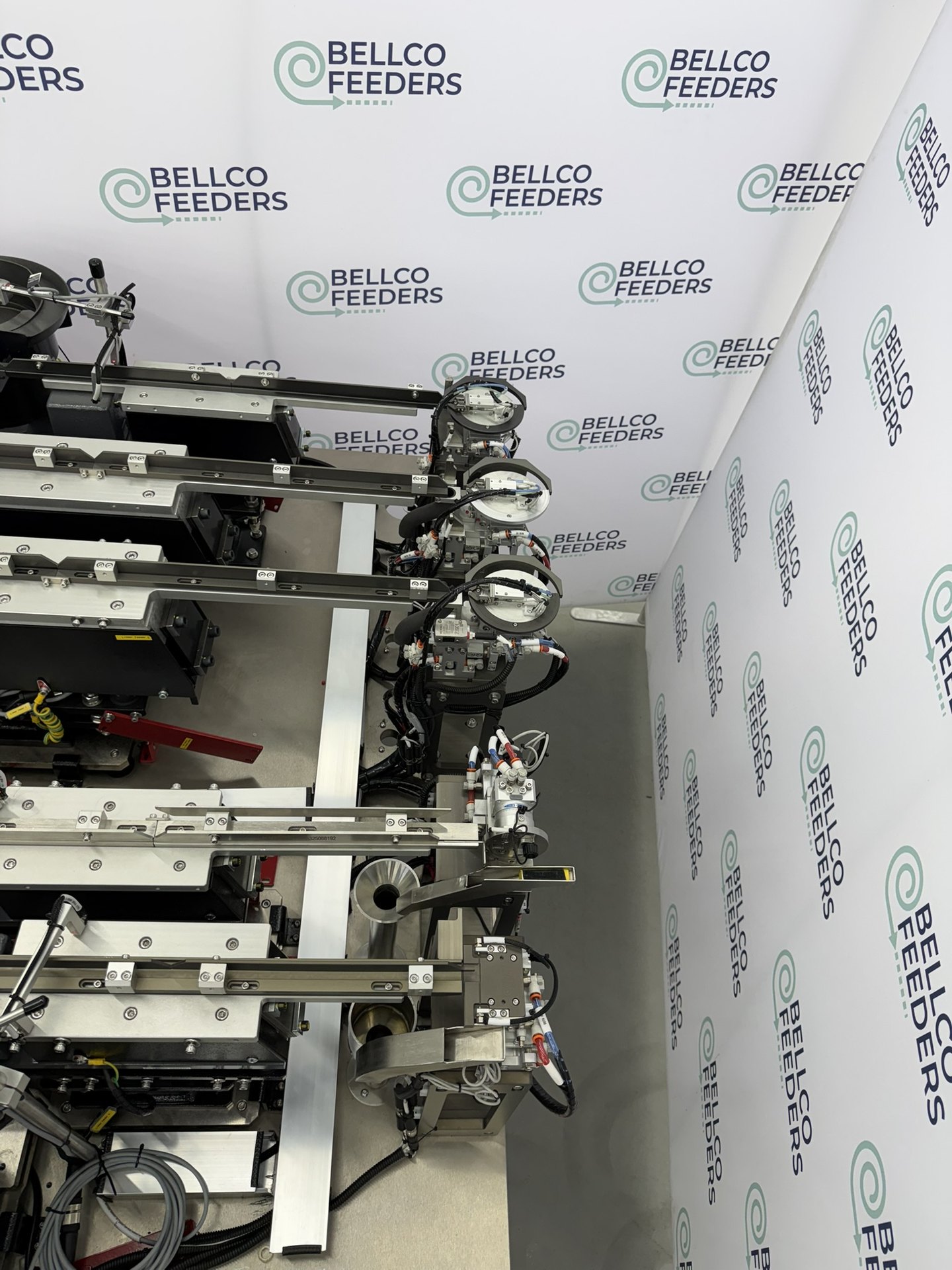
Vision Across a Multi-Track Cell
Overhead cameras inspecting parts on parallel tracks feeding a single assembly cell, with rotary escapements presenting each lane to the robot.
3 PPM
Every one correct
Machine Integration
Telling Two Near-Identical Ends Apart
Three sizes of actuator pin, each with a tapered end and a cylindrical end, all the same diameter. Standard tooling could not reliably distinguish them. A Keyence IV camera plus a purge gate meant the robot only ever saw correctly-oriented parts.
33 PPM
IV-4 in-flight check
Precision Machining
Nose-End Leading, Every Cycle
Tapered tubes whose gentle taper defeated geometric escapement gates at speed. A Keyence IV-4 inspects each tube in flight and blows off any running tail-first before it reaches the escapement.
Multi-lane
One cell
Robotics & Automation
Vision Across a Multi-Track Cell
Overhead cameras inspecting parts on parallel tracks feeding a single assembly cell, with rotary escapements presenting each lane to the robot.
Common Questions
Vision FAQs
When is vision the right answer, and when is it overkill?
Vision earns its place when the geometric difference you need to detect is real but too subtle for tooling to catch at speed — a gentle taper, a small blind feature, a near-symmetric part. If mechanical tooling can do it reliably, we will tell you to save the money.
Does vision slow the feeder down?
It can, and sometimes that is fine. One vision-guided system we built runs at three correctly-oriented parts per minute, because the robot downstream worked at that cadence and feeding faster would have achieved nothing. Reliability was the requirement, not rate.
What happens to parts that fail inspection?
They are purged back into the hopper and recirculated. Nothing is scrapped, and the pick point only ever sees parts the camera has passed.
Do I need to supply the vision hardware or the PLC?
No. We can supply the camera, the control cabinet, the power supply, a mini PLC and all the wiring and programming as one package. If you have a standard you want us to build to, we will build to it instead.
How long does it take to get a quote?
Three business days is our average. Send us the part — or a drawing of it — along with your target feed rate and how the parts need to be presented downstream, and an engineer will come back to you with a scoped quote rather than a ballpark.
What support comes with the system?
Every system ships with a one-year warranty covering parts and labor, and you get direct access to the engineers who built it rather than a ticket queue. We provide remote diagnostics at no charge and can dispatch on-site support anywhere in North America.
Ready to Start?
Let's Look At Your Part.
If two ends of your part are nearly identical and mechanical tooling keeps getting it wrong, send it to us. We will tell you whether vision solves it — and whether it is worth what it costs on your volumes.
Talk to an Engineer
- Quote Turnaround
- 3 business days
- Design Review
- SolidWorks model before build
- FAT Video
- Included on every system
- Warranty
- 1 year, parts & labor
- Location
- Concord Township, Ohio