
Additional Products
Counting & Bagging Systems
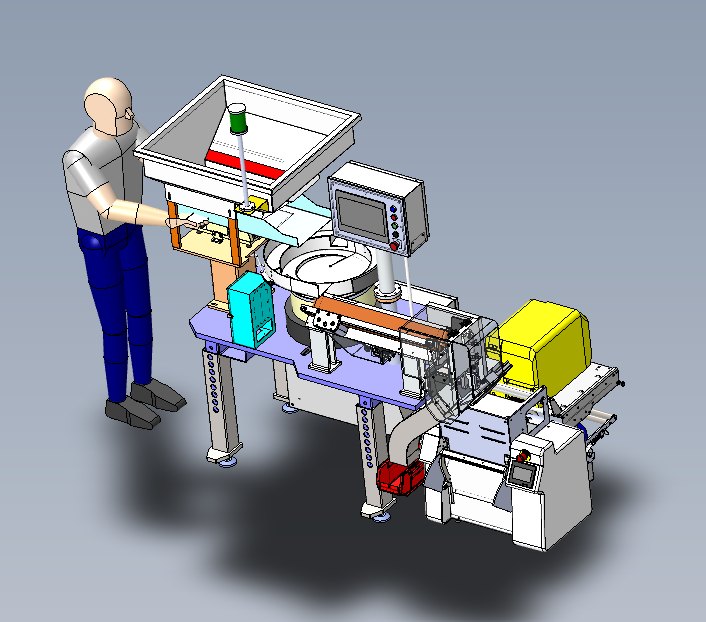
Hardware kits that used to be counted and bagged by hand, coming off the line finished and sealed. Parts are fed, singulated into a single-file line, then counted and verified two independent ways — and any bag that doesn't match gets rejected before it's sealed. Built on Allen Bradley controls, as one machine, from one supplier.
What It Does
LOAD IT, WALK AWAY, COLLECT FINISHED BAGS
BULK LOADING
An operator loads parts into the hopper. That's the only manual step in the cycle.
FEEDING AND SINGULATION
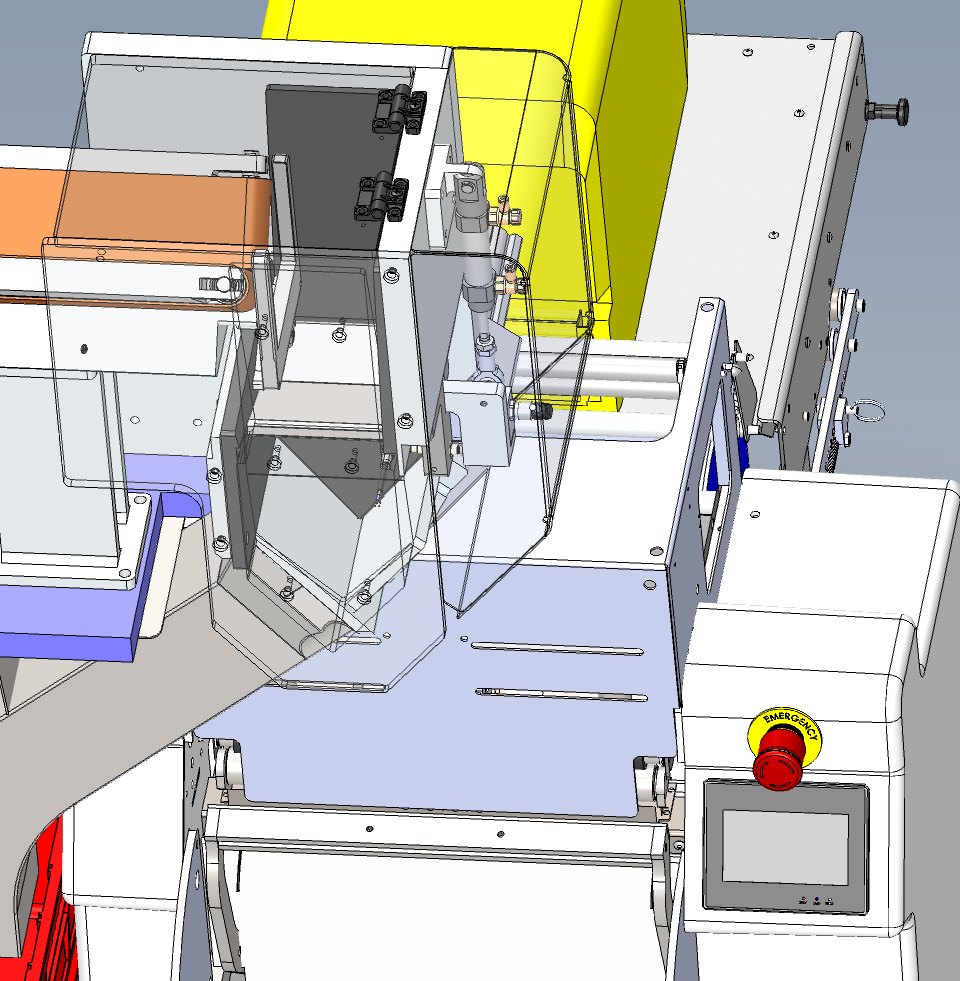
The hopper feeds a Bellco bowl feeder tooled to your part, which singulates the parts into a single-file line — nothing double-stacked, nothing riding alongside anything else. That single file is what makes an accurate count possible downstream. Adjustable tooling means changing from one part to the next is a manual adjustment that takes under five minutes, not a tooling swap.
COUNT AND VERIFY
Parts transfer onto a V-track conveyor and into our counting and verification stage. Every batch is confirmed two independent ways before it goes anywhere, and a batch that doesn't agree on both is rejected rather than bagged. The specifics of how we do that are something we'll walk you through directly.
BAGGING AND SEALING
The verified batch drops into the bagger, which forms, fills and seals the bag from a pre-sized roll.
TAKEAWAY
Finished bags run out on an L-shaped takeaway conveyor into a tote, so nobody has to stand there emptying a bin every ten minutes.
Why It's Trusted
A BAG THAT ISN'T RIGHT NEVER GETS SEALED.
Most counting systems confirm a count one way and trust it. Ours confirms every batch two independent ways and compares them against the recipe for that part number. If the two don't agree, the batch is rejected before it reaches the bag.
That matters because a miscount doesn't show up on your floor — it shows up at your customer's, in a kit that's short a fastener. The whole point of automating this is not having to spot-check it.
Recipes are stored per part number in the PLC, so an operator selects the part and the machine knows the count, the weight, and what to print on the bag.
The Difference
BUILT LIKE A PRODUCTION MACHINE, NOT A BOLT-TOGETHER UNIT.
There are cheaper counting and bagging units on the market. This isn't one of them, and that's deliberate — this is equipment that runs a shift every day, and it's built to the standard of the automation cells we supply to Tier 1 automotive.
ALLEN BRADLEY CONTROLS THROUGHOUT
Allen Bradley PLC and servo, in a Saginaw control cabinet, with a touchscreen HMI. The same controls platform your plant floor already standardizes on, not a proprietary controller nobody can service.
ONE SUPPLIER, ONE SYSTEM
The feeder, the counting and verification stage, the bagger and the takeaway all come from us on one purchase order. You're not buying a feeder from one company, a bagger from another, and owning the integration risk in between.
DESIGNED IN SOLIDWORKS, APPROVED BEFORE BUILD
You see and approve a full 3D model with real dimensions before anything is built, so you know exactly what's going on your floor and how it fits. No surprises on delivery.
GUARDED AND E-STOPPED
Everything that actuates is fully guarded, and the machine runs off a single main power source with one disconnect, so there's one lockout point when someone works on it.
1-YEAR WARRANTY, PARTS AND LABOR
Covering both what we manufacture and the commercial components we specify, with direct access to the engineers who built it.
Configure It
SPEC'D AROUND YOUR PART AND YOUR KIT
BAGS
Pre-sized bags on rolls, from 3" × 3" up to roughly 8" × 8", in whatever thickness suits the part. Bags are slightly oversized to the part so a dropped part always clears the opening. Roll changes take about five minutes, and we supply the bags.
THERMAL PRINTING
Optional in-line thermal printer for logo, part number, quantity and barcode, driven off the part recipe in the PLC.
ELEVATED HOPPER
The standard system loads high by nature. Where ergonomic loading matters, an elevated conveyor hopper brings the load height down to roughly waist level.
LOAD SHELF
For heavier kits, an actuated shelf supports the bag during fill and seal so the weight of the parts isn't hanging on the bag.
TAKEAWAY CONVEYOR
L-shaped conveyor running finished bags out to a tote, or handing off to your own conveyor.
INSTALLATION AND TRAINING
On-site commissioning and operator training by a Bellco controls engineer and technician, available as an option.
Training
COME RUN IT BEFORE IT SHIPS
Send your operator and controls person to our facility for the factory acceptance test and we'll spend the day training them on the machine at no charge. Most customers do that and then have us out for commissioning as well, so the people running it have seen it twice before it goes into production.
Common Questions
Counting & Bagging FAQs
Is this a standard machine or a custom build?
Custom, like everything we build. The feeder is engineered to your part, the count and the bag size are yours, and the layout is designed around where it has to sit on your floor.
Can you kit more than one part into a bag?
That is usually why customers ask. Multi-part kitting means more than one feeder into a common counting head, which is well within what we build — our multi-feeder cells put five feeders on one shared baseplate.
What accuracy can you hold on the count?
Every batch is verified two independent ways and cross-checked against the stored recipe for that part number before the bag is sealed. Anything that doesn’t agree on both checks is rejected rather than bagged. We’ll walk you through exactly how it works on a call.
What bag sizes can you run?
Pre-sized bags on rolls, roughly 3″ × 3″ up to 8″ × 8″, in the thickness that suits your part. Bags come slightly oversized relative to the part so a dropped part always clears the opening. We supply the bags.
How fast does it run?
It depends on the part and the bag size, but smaller bags typically run 40–50 per minute and larger bags 20–30 per minute. Send us the part, the count per bag and the bag size and we’ll give you a real number for your application.
How long does changeover take?
Under five minutes. The feeder tooling adjusts manually rather than swapping out, and a bag roll change is about the same.
Is there a weight limit per bag?
Yes. Bags are held open during fill, so there’s a practical limit to how much weight they’ll carry. For heavier kits we add an actuated load shelf that supports the bag through fill and seal. Tell us the kit weight and we’ll spec it.
Can the bag be printed?
Yes, with the optional in-line thermal printer — logo, part number, quantity and barcode, driven off the part recipe in the PLC.
What does the machine need from us to install?
One power drop. Everything runs from a single main control cabinet with one disconnect, which also means one lockout point for maintenance.
How long does it take to get a quote?
Three business days is our average. Send us the part — or a drawing of it — along with your target feed rate and how the parts need to be presented downstream, and an engineer will come back to you with a scoped quote rather than a ballpark.
What support comes with the system?
Every system ships with a one-year warranty covering parts and labor, and you get direct access to the engineers who built it rather than a ticket queue. We provide remote diagnostics at no charge and can dispatch on-site support anywhere in North America.
Ready to Start?
Let's Scope Your Packaging Line.
Tell us the part, the count per bag, the bag size, and the rate you need to hit. We will come back with a scoped quote and a SolidWorks layout you can drop onto your floor plan.
Talk to an Engineer
- Quote Turnaround
- 3 business days
- Design Review
- SolidWorks model before build
- Controls
- Allen Bradley PLC, servo & HMI
- Warranty
- 1 year, parts & labor
- Training
- Free day at our facility during FAT