
Components & Accessories
Sound Enclosures & Noise Control
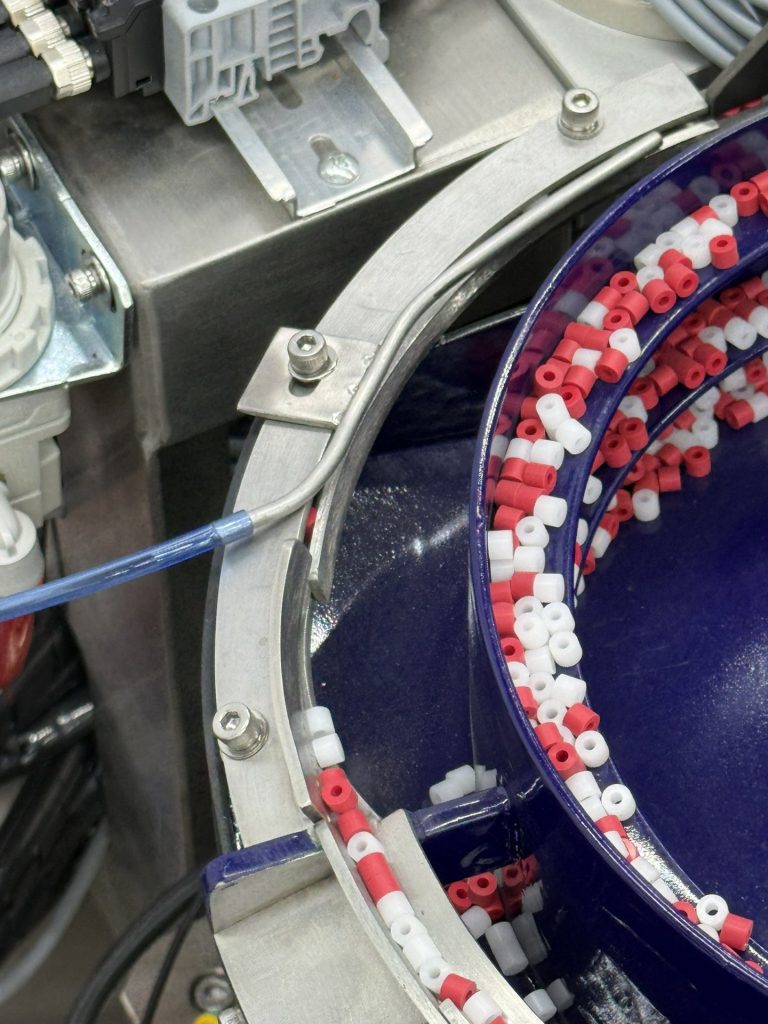
Vibratory feeders work because they vibrate, and vibration makes noise. We treat it at three points — the bowl, the mount and the shroud — so a multi-feeder cell does not dominate the room.
 01 / 04
Engineering Detail
Five Feeders, Under 80 Decibels
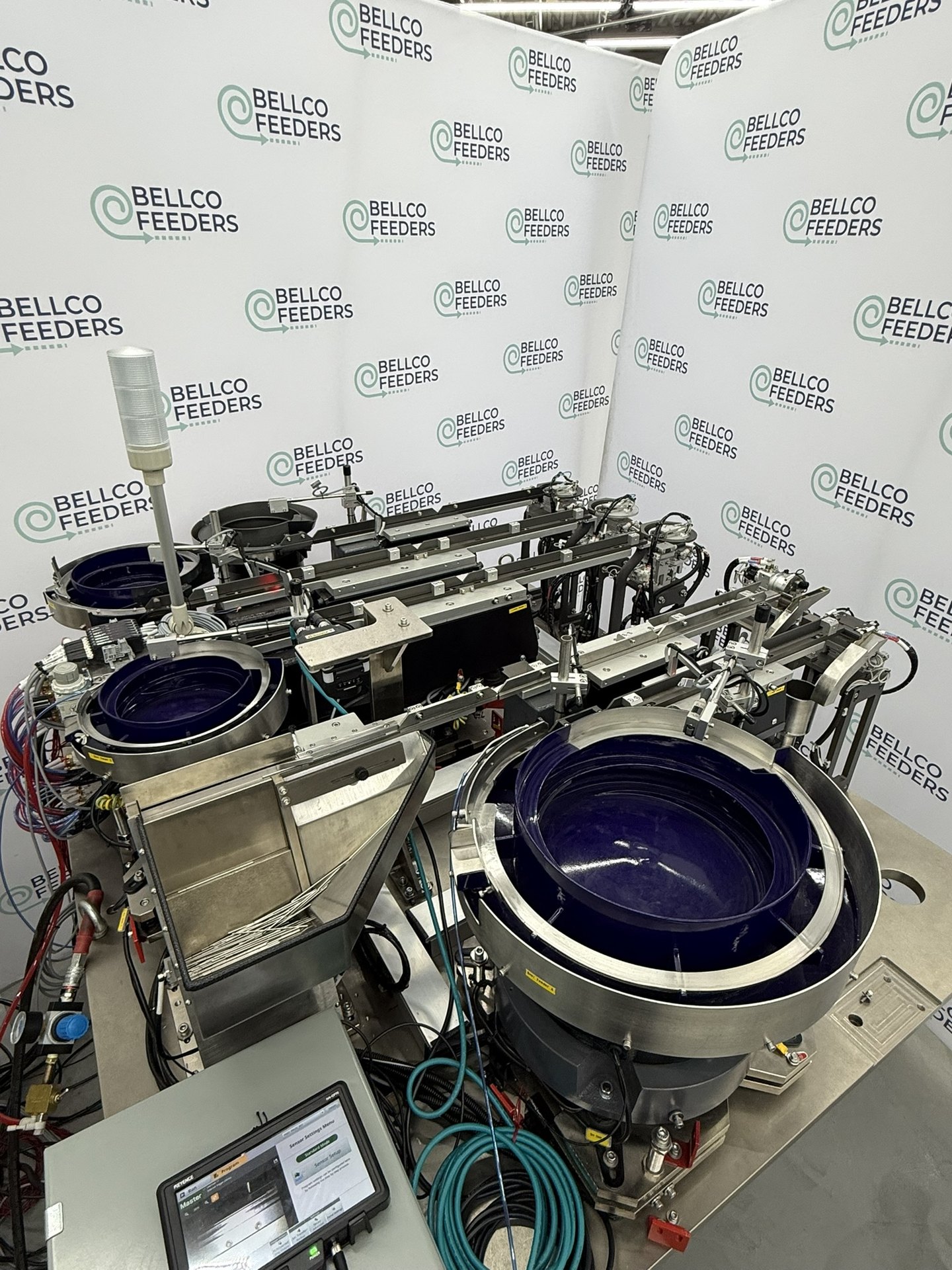
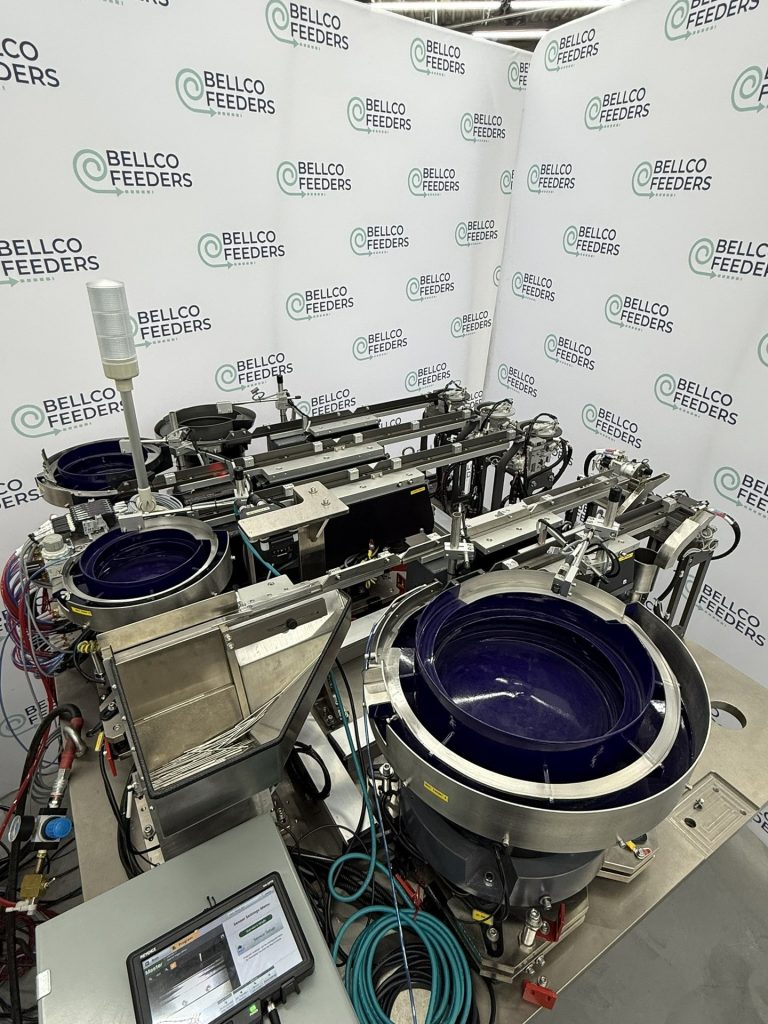
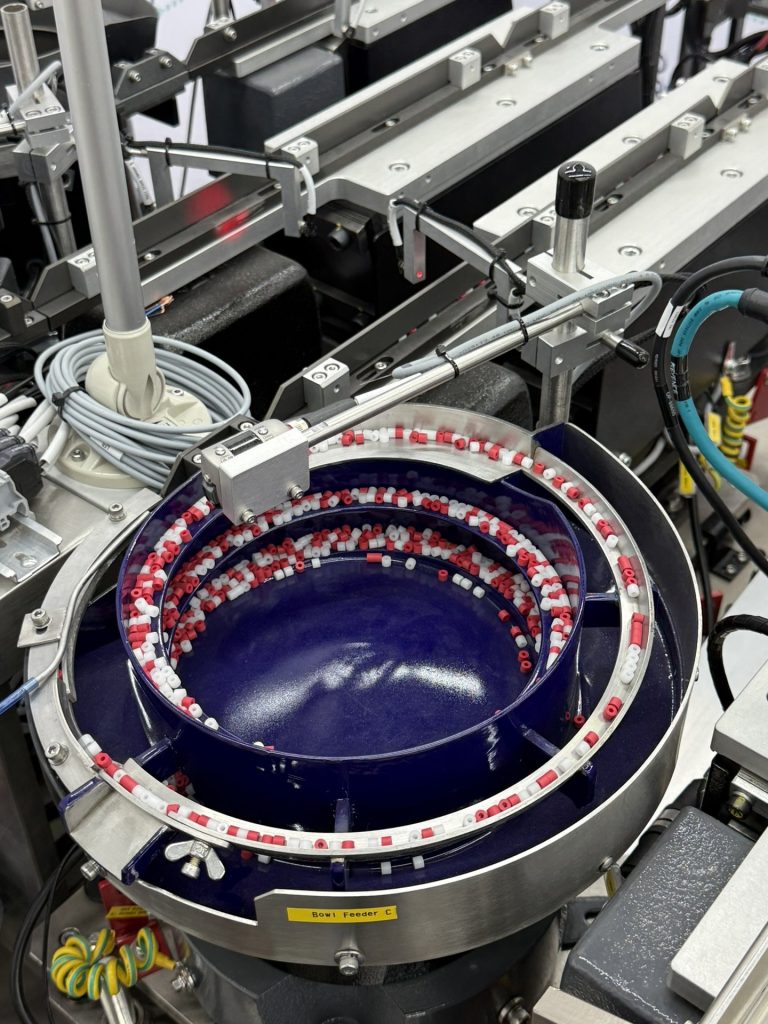
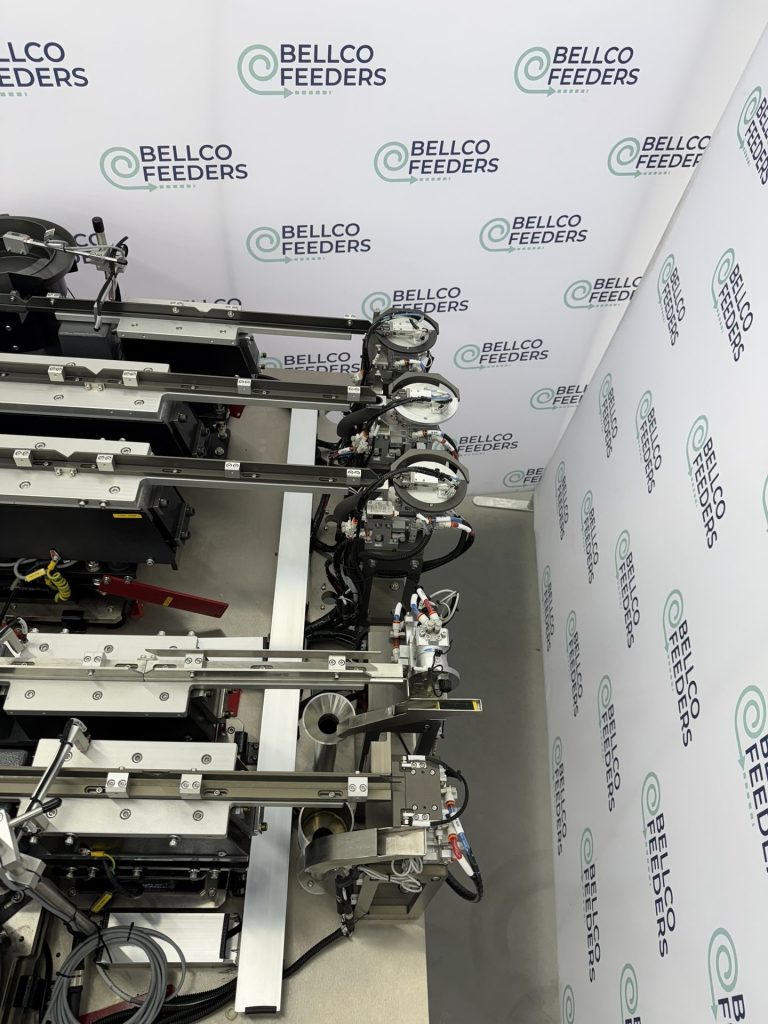
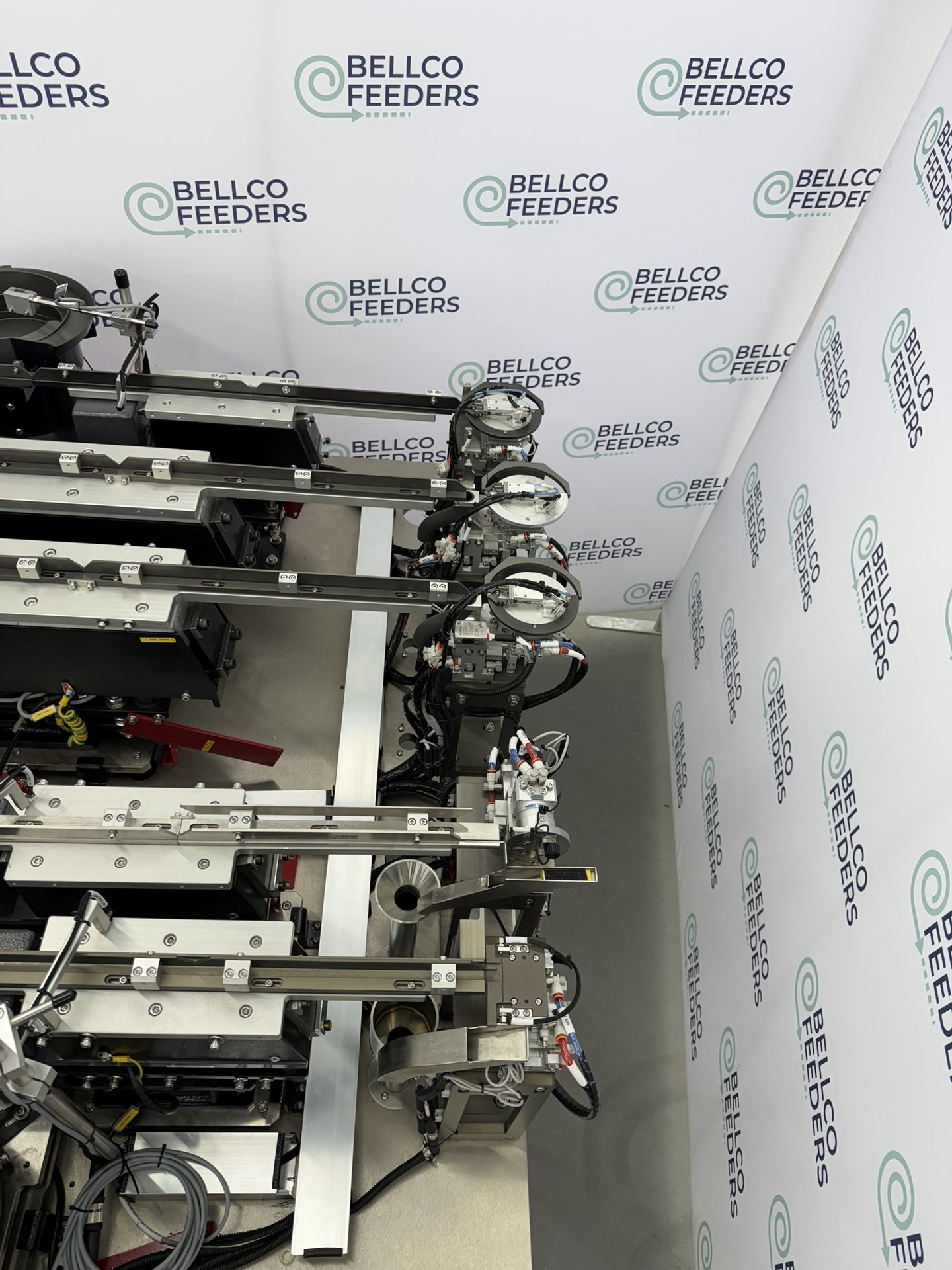
Five vibratory feeders running at once should sound like a factory. On a recent five-feeder cell — four bowls and a step feeder on one shared baseplate — the whole system runs under 80 decibels, quieter than most single-bowl feeders. Three engineering choices got us there.
What This Buys You
Why Noise Control Is Worth Specifying
Operators Can Work Beside It
A cell that does not dominate acoustically is one people can stand next to and hold a conversation around. That matters more than a spec sheet usually acknowledges.
Parts Come Out Unmarked
The polyurethane coating that quiets the bowl is also what stops it marking plated, painted and finished parts — one specification solving two problems.
Multiple Feeders On One Frame
Isolation is what makes a shared baseplate possible at all. Each feeder floats on its own sub-plate, so five bowls can run on one frame with no harmonic feedback between them.
Common Questions
Noise Control FAQs
How quiet can a vibratory feeder actually be?
Quieter than most people expect. A five-feeder cell we built — four bowls plus a step feeder — runs under 80 decibels with everything on, which is below what many single-bowl feeders from other suppliers produce. The number depends on the part, the rate and the bowl size, so we will not quote yours until we have those.
Does a polyurethane coating slow the feeder down?
It changes the feed characteristics, which is why the coating is specified as part of the bowl design rather than added afterwards. We tool the bowl knowing the coating is there and prove the rate at the factory acceptance test.
Can you quiet a feeder we already have?
Sometimes. Shrouding and isolation can be retrofitted; a bowl coating usually cannot be done well after the fact. Send us photos and the machine details and we will tell you honestly what is worth doing.
Is noise control an upcharge?
Isolators and sub-plates are how we build multi-feeder systems, not an option on top. Bowl coatings and acoustic shrouds are specified per application — they are quoted, and we will tell you when we think you do not need them.
How long does it take to get a quote?
Three business days is our average. Send us the part — or a drawing of it — along with your target feed rate and how the parts need to be presented downstream, and an engineer will come back to you with a scoped quote rather than a ballpark.
What support comes with the system?
Every system ships with a one-year warranty covering parts and labor, and you get direct access to the engineers who built it rather than a ticket queue. We provide remote diagnostics at no charge and can dispatch on-site support anywhere in North America.
Ready to Start?
Let's Quiet Your Cell.
Tell us how many feeders are going into the cell and what the parts are. We will scope the isolation, the coatings and the shrouding around a decibel target rather than guessing after the build.
Talk to an Engineer
- Quote Turnaround
- 3 business days
- Design Review
- SolidWorks model before build
- FAT Video
- Included on every system
- Warranty
- 1 year, parts & labor
- Location
- Concord Township, Ohio